World Travel Explorer World Travel Explorer

11 FREE TRAVEL DESTINATION IN JAKARTA

Free tours in Jakarta that are comfortable and enjoyable for those of you who want to vacation around the city of Jakarta

BANYU TIBO BEACH, PACITAN

Banyu Tibo Beach is a beach tourism object that presents quite beautiful natural panoramas that are rarely found on beaches in Indonesia.

Pindul Gunung Kidul Cave Nature Tourism

Enjoy Nature with Cave Tubing

INDRAYANTI BEACH GUNUNGKIDUL

Jogja Beach Tourism with Balinese Nuances

NAMPU BEACH

Nampu Beach, Exotic Wonogiri Beach Tourism

HISTORY OF MATHEMATICS

The branch of study known as the history of mathematics is the investigation of the origins of discoveries in mathematics and, to a lesser extent, the investigation of the methods and notation of mathematics in the past

HISTORY OF MOUNT KRAKATAU IN INDONESIA

In the beginning, the big island of Krakatau, which we usually call by the name of Mount Krakatau, was a mountain (ancient Mount Krakatau) which has a height of about 2000 meters above sea level with a circle of beaches of about 11 km and a radius of about 9 km2.

August 03, 2016

Along Gunung Kidul Beach, Yogyakarta's Kuta Beach


Along Gunungkidul Beach Tourism Object - Gunungkidul Regency, Yogyakarta is indeed famous for its exotic and unspoiled beach tourism, one of which is Sepanjang Beach which is in Kemadang Village, Tanjungsari District, Gunungkidul Regency, Yogyakarta. This beach tourism which is still relatively new has a long coastline among the beaches in the Gunungkidul district offering natural beauty with clean white sand along the beach, many people call it Kutanya Beach, Yogyakarta.

Beach tourism does not offer modern things such as cafes or luxury cottages, but on this beach, it offers a closeness to nature, this can be seen in the absence of permanent buildings standing on the beach, which are visible only a few huts occupied by local people. around. At the Sepanjang Beach Tourism Object, you can still find various types of sea animals and shellfish, but you have to be careful because there are still many sea urchins with sharp spines.


This beach, which is in line with Sundak, Kukup, and Baron, has waves that are quite big enough so that no residents around the beach go to sea, most of the local residents use the fields around the beach to plant soybeans or other crops. Meanwhile, if we look back we can see 2 hills whose slopes are used by the local people to grow corn as a staple food source. This makes the natural beauty of Sepanjang Beach still well maintained and looks still clean with the nature around the beach that is still maintained.

Access to Along Beach
To go to Sepanjang Beach, you should bring your own vehicle, because there is no public transportation to go on this tour. Meanwhile, to get to this beach, you can go through the Baron Beach route, from the South Wonosari terminal you will find a beach retribution post. After that, follow the road until you find the Sepanjang Beach signboard. Hope it is useful.

July 23, 2016

9 Unique Javanese Traditional Ceremonies and Their Descriptions

The Javanese are known as the tribe with the largest population in all of Indonesia. Wherever in the archipelago, the Javanese are always there. Besides being known for having friendly personalities, the Javanese people also have an extraordinary history of tradition and culture, just like other tribes. This is evidenced, for example, by the many types of dance, music, traditional houses, and traditional ceremonies it has.

Javanese Traditional Ceremony
A traditional ceremony is a ritual that is carried out jointly by groups of people who still have ethnic, tribal, and cultural links to achieve goals that originate from their ancestral and ancestral values. In Java itself, there are several traditional ceremonies that are quite unique and must be introduced to the younger generation so that this ancestral heritage is preserved and maintained. What are the Javanese traditional ceremonies? Here's the information for you.


1. Kenduren Ceremony
The first Javanese traditional ceremony is kenduren or slametan. This ceremony is carried out from generation to generation as a commemoration of joint prayers led by traditional elders or religious leaders. The acculturation of Islamic and Javanese culture in the 16th century AD made this ceremony undergo major changes, apart from the Hindu/Buddhist prayers that were originally used to be replaced with Islamic prayers, offerings and offerings are also no longer used in this ceremony.
Upacara Kenduren
Based on its purpose, this Javanese traditional ceremony is divided into several types which include:
1. Kenduren wetonan (wedalan) is a kenduren ceremony that is held on someone's birthday (weton) as a means to pray for longevity together.
2. Kenduren sabanan (muntungan) is a ceremony performed to raise the ancestors of the Javanese before entering the fasting month. This kenduren ceremony is generally carried out at the end of the month of Sya'ban, before the Nykar ritual or the sowing of flowers on their ancestral graves is carried out.
3. Kenduren likuran is a kenduren ceremony that is held on the 21st of the fasting month and is carried out to commemorate the revelation of the Qur'an or Nujulul Quran.
4. Kenduren ba'dan is a celebration that is held on 1 Shawwal or on Eid al-Fitr, the purpose of which is to bring down the ancestral spirits to their resting places.
5. Kenduren kata is a ceremonial ritual that is held in a Javanese family and has a purpose or goal, for example when they want to send prayers to ancestral spirits, circumcisions, weddings, and so on. Kenduren muludan is a Javanese traditional ceremony that is held every 12th of the month of Maulud with the aim of commemorating the birthday of the Prophet Muhammad SAW.

2. Grebeg Ceremony
Apart from the kenduren ceremony, in Java, it is also known as the Grebeg Ceremony. This ceremony is held 3 times a year, namely on 12 Mulud (the third month), 1 Sawal (the tenth month), and 10 Big (the twelfth month). This ceremony was held as a form of royal gratitude for God's gifts and blessings.

3. Sekaten Ceremony
Sekaten is a Javanese traditional ceremony that is held within seven days as a form of commemorating the birthday of the Prophet Muhammad. Based on its origin, the word Sekaten which is the name of the ceremony comes from the term Syahadatain, which in Islam is known as the sentence of monotheism. The sekaten ceremony was carried out by removing the two sets of gamelan sekati from the palace, namely gamelan Kyai Gunturmadu and gamelan Kyai Guntursari to be placed in front of the Surakarta Grand Mosque.

4. Ruwatan Ceremony
The ruwatan ceremony is a Javanese traditional ceremony that is carried out with the aim of purifying or purifying a person from all bad luck and providing safety in living life. An example of the ruwatan ceremony is the one carried out in the Dieng Plateau. Dreadlocked children who are considered descendants of buto or giants must be treated for a ritual immediately to be free from all harm.
Upacara Ruwatan

5. Javanese Traditional Wedding Ceremony
In Javanese traditional marriages, a wedding ceremony is also known which is very unique and sacred. There are many stages that must be passed in this Javanese traditional ceremony, starting from splashing, splashing, grinding ceremonies, midodareni, srah-srahan or peningsetan, nyantri, panggih or bride-to-be gathering ceremonies, balancing orders, the wiji dadi ritual, the Kacar Kucur or Tampa ritual. rich, dhahar klimah or dhahar kembul rituals, sungkeman ceremonies and so on.
Upacara Perkawinan Tradisional Jawa

6. Tedak Siten Ceremony
The tedak siten ceremony is a Javanese traditional ceremony that is held for babies aged 8 months when they start learning to walk. This ceremony in several other areas is also known as the ceremony down the ground. The purpose of holding this ceremony is none other than to express the gratitude of the parents for the health of their child who has started to be able to walk in the natural surroundings.

7. Tingkepan Ceremony
The tingkepan ceremony (mitoni) is a Javanese traditional ceremony that is performed when a woman is 7 months pregnant. At this ceremony, the woman will be bathed in the water of the setaman flower accompanied by prayers from the elders, so that her pregnancy will be safe until the delivery process later.

8. Kebo Keboan Ceremony
The majority of the Javanese people work as farmers and also have their own ceremonial rituals. Kebo-keboan – as the name implies, is a traditional Javanese ceremony that is carried out to reject all misfortunes and misfortunes on the plants they plant, so that these plants can grow well and produce a satisfying harvest. In this ceremony, 30 people dressed like buffalo will be paraded around the village. They will dress up and walk like buffalo plowing a field.

9. Larung Offering Ceremony
The larung sesaji ceremony is a ceremony held by the Javanese who live on the north and south coasts of Java. This ceremony is held as an expression of gratitude for the catch of fish while they are at sea and as a request that they are always given safety when in business. Various foodstuffs and animals that have been slaughtered will be floated or washed into the sea every 1st of Muharram in this Javanese traditional ceremony.
Upacara Larung Sesaji
So, those are the nine Javanese traditional ceremonies that are still being preserved and carried out today. Interesting right..? So that this article can be even better, we will continue to update it along with additional information that continues to grow. If there are suggestions or criticisms, please convey them through the comments column.

Philosophy 4 Traditional Houses of North Sumatra (Batak)

Even though the Bolon traditional house is considered the only nationally recognized identity for the traditional North Sumatran house, did you know that the Batak people in North Sumatra actually have more than one residential architectural style? The Batak tribe itself is divided into several sub-tribes, namely the Karo Batak, Simalungun Batak, Pakpak Batak, Toba Batak, Angkola Batak, and Mandailing Batak, each tribe having different traditional house architectural arts. In the following, we will discuss some of the traditional North Sumatran houses of the Batak children one by one. North Sumatra Traditional House.

1. Bolon Traditional House, Toba Batak
The Toba Batak traditional house or commonly called Rumah Bolon has been asked to represent the traditional house of North Sumatra on the national stage. The house is rectangular in shape and is included in the category of stilt houses and is generally inhabited by 4-6 families who live together.

Rumah Adat Bolon, Batak Toba
If in Java and other tribes in Sumatra the stilt style house is deliberately made to avoid attacks by wild animals, the bolon traditional house is actually deliberately made on stilts so that it has a bottom of the house. The house is then used as a cage for their pets such as pigs, chickens, or goats.

If you want to enter the bolon house, you have to go through a ladder at the front of the house. The staircase has an odd number of steps, and upon entering this house, we will be forced to duck because of the short door of the house. The door of the house is deliberately made short so that guests bow down so that philosophically they are considered to respect the owner of the house. So, here is the physical appearance of this Toba Batak traditional house.

2. Siwaluh Jabu Traditional House, Karo Batak
The Siwaluh Jabu traditional house, as it is commonly called, is a Karo Batak traditional house whose existence can still be found today. This house is architecturally very artistic style. The walls are tilted, the roof is in the form of a three-story triangle, and at the top of each triangle is decorated with a buffalo head symbolizing prosperity.

The Siwaluh Jabu traditional house is generally very large. It is usually inhabited by around 8 indigenous families. Each family in the house generally has its own role. There are those who act as leaders, workers, cooks, and so on. The following is the physical appearance of this traditional house in North Sumatra.
Rumah Adat Siwaluh Jabu, Batak Karo
  
3. Bolon Traditional House, Simalungun Batak
The Simalungun Batak has a traditional house with the same name as the Toba Batak traditional house, namely the bolon house. Even though it has the same name, architecturally the Bolon traditional house in the Simalungun Batak style is different from the Bolon house in the Toba Batak style. The difference lies in the pillars, roof style, and decoration.

The supporting pillars of the Simalungun Batak traditional house are arranged horizontally across and resting on unpacked foundations. The style of the roof is high with a very steep slope and is equipped with windows. The decoration also has more aesthetic value because of the carved ornaments on the wooden walls. The following is the front view of this North Sumatra traditional house.
Rumah Adat Bolon, Batak Simalungun

4. Bagas Godang Traditional House, Mandailing Batak
One of the remnants of the architectural art heritage of the Mandailing tribe in North Sumatra in the past is the architectural art of the Bagas Godang house. This traditional house in North Sumatra in the past was intended as the residence of the king. Therefore, this godang bagas house is usually built on a large complex and its existence is generally always accompanied by the Sopo Godang building or traditional hall.
Rumah Adat Bagas Godang, Batak Mandailing

Both the Bagas Godang house and the sopo godang building are stilt houses supported by an odd number of large wooden pillars, the same as the number of steps.

So, those are some of the traditional houses of North Sumatra which come from 6 children of the Batak tribe who are the original inhabitants. It's classic, isn't it..? Interested in making a dwelling in the style of one of the Batak traditional houses above? Please try!

Philosophy 3 Betawi Traditional Clothing


The Betawi people are considered as a tribe with a very high level of cultural acculturation in Indonesia. Looking at history, this tribe originating from DKI Jakarta and its surroundings has indeed received a lot of influence from various cultures of people outside the region. Chinese, Arab and Dutch traders as well as other tribal people in Indonesia have made many contributions to the development of customs in this tribe since ancient times. This is what makes the customs and culture of the Betawi people so unique and different.

We can see the differences and uniqueness of the Betawi tribe from many things, starting from how the architecture of their dwellings (traditional houses), how they dress (traditional clothes), to various traditions and ceremonies which are still sustainable today. Well, actually in this blog we will discuss these three things, but on this occasion, we will only discuss Betawi traditional clothing. For Betawi traditional house architecture and traditional ceremonies, maybe we will discuss it on another occasion.

Betawi Traditional Clothing
In general, we have classified Betawi traditional clothing into 3 types, namely traditional clothing for daily use, traditional clothing for official events, and traditional wedding clothing commonly worn by Betawi brides. In the following, we will discuss this three one by one.

1. Betawi Traditional Clothing
Pakaian Keseharian Adat Betawi
For daily life, Betawi people usually wear simple clothes. The men wear plain-colored Koko or conscious clothes, long underpants with simple batik motifs, a cloth attached in the form of a sarong or shawl slung over their shoulders, and a black velvet cap. As for the women, they will generally wear a short-sleeved shirt with short sleeves, geometric patterned batik cloth in bright colors, and a headscarf that matches the color of the dress. The following is an example of an image of Betawi traditional clothing that is used in their daily lives.

2. Traditional Betawi Clothing
Pakaian Resmi Adat Betawi
In official events such as weddings, celebrations, or big days, the Betawi people have official clothes that are considered very antique. The men wore black jackets with gold chain decorations on their pockets, black cloth trousers with short sarongs, and black caps to cover their heads. Women, they wear clothes that are actually still similar to their daily clothes, namely brackets, geometric patterned batik cloth, and brightly colored headscarves. The following is the appearance of Betawi traditional clothing in the official event.

3. Traditional Betawi wedding attire
Pakaian Pengantin Adat Betawi
In contrast to everyday clothes and official wear, the Betawi traditional clothes worn by brides are clothes that are thick with a mixture of Chinese, Arabic, and Western cultures. It is not surprising that this wedding dress was given a strange name, “Care Hajj Dress Up” for Betawi men's wedding dress and “Cine Bride Care None Dress Up”.

The hajj care attire worn by the groom during his wedding includes brightly colored robes and headgear made of turbans. As decoration, they will also wear scarves patterned with gold thread and brightly colored beads. Meanwhile, the care none of cine brides includes bright Chinese-style blouses made of satin, dark-colored skirts called Kun, and as a complement, on their heads, they use rocking flowers with hong-bird motifs with a fake bun complete with a veil on the face.

On the bun, jasmine flower ornaments formed by combs and ronje complement the beauty. Other jewelry used by Betawi brides is an electric bracelet, a wide necklace, and beads worn on the chest. For footwear, they use boat-style slippers. So, for more details, see the following pictures of Betawi traditional clothes.

So, that's information about the repertoire of Betawi traditional clothing, starting from everyday clothes, official clothes, and wedding clothes. Hopefully, it can be useful so that our knowledge about the assets of the Indonesian nation's cultural heritage is increasing. Regards.

December 12, 2015

Gunungkidul Pindul Cave Nature Tourism, Enjoy Nature with Cave Tubing

Gunungkidul Pindul Cave Tourism: Enjoy Nature with Cave Tubing

Pindul Cave Tourism Object Gunungkidul - Pindul Cave which is located in the hamlet of Titleran I, Bejiharjo Village, Karangmojo District, Gunung Kidul, about 7 km to the north of Wonosari City, is one of seven caves fed by an underground river in the Beriharjo area. The Pindul Cave Tourism Object has a water depth of about 5 meters, a length of about 300 meters, and a width of 5 meters, and the distance between the roof of the cave and the water surface is about 4 meters.

In one part of Pindul Cave, precisely in the middle of the cave, there is a rather large room with a hole on top, the people around the cave call it an inverted well, and the atmosphere is even more impressive with the beautiful natural panorama with sunlight entering this room. This hole is often used as a vertical entrance by members of the Sar Team or by visitors to Pindul Cave Tourism.
Gunungkidul Pindul Cave Tourism: Enjoy Nature with Cave Tubing

History of Pindul Cave
According to stories circulating in the surrounding community, it all started with a character named Kyai Jaluwesi who had a conflict with a giant named Bendhogrowong. The two of them were involved in fighting supernatural powers, with Kyai Jaluwesi excelling. The giant then issued his knowledge due to feeling pressured. Unfortunately, the knowledge went wrong about Widodo and Widadi's pet dog, Kyai Jaluwesi's twins. The dog, named Sona Langking, was seriously injured and ran wildly toward a water source that was behind the bushes. Kyai Jaluwesi, who followed Sona Langking's running direction, was shocked when he found that his dog had recovered from a serious injury caused by the giant's magic.

Seeing this, Kyai Jaluwesi then named the water source Mbelik Panguripan, because it was able to heal the severe injuries his dog had suffered. Sometime after that incident, a man and woman named Kyai and Nyai Sejati appeared who wanted to rule over the land around Mount Bang. They asked Kyai Jaluwesi to move from that place, and Kyai Jaluwesi agreed. Even so, Kyai Jaluwesi wanted a condition, that is, after his move, the people of Gunung Bang had to hold a clean lepen (river) event, ledhek (tayub) dancers, on Monday Most every year. Then Kyai Jaluwesi moved to the Pindul Cave area, until moksa, and is believed to be a caretaker at Pindul Cave and Mbelik Panguripan.

Of course, legends or stories circulating cannot be trusted one hundred percent, but a good reader should be able to understand what is behind each legend, not even consider it mystical or unreasonable. The Gunungkidul Pindul Cave Tourism Object, which is currently the prima donna of cave tubing tourism, is indeed very interesting and offers a different sensation from other tours that are common in Yogyakarta.

Cave Tubing Sensation
Cave tubing is almost the same as rafting (rafting). If rafting or white water rafting is an activity along a river using a boat, then cave tubing is an activity along a cave by riding on an inner tube. Because the flow of water in the Pindul Cave Nature Tourism Object is calm and the water discharge is relatively the same both in the rainy season and the dry season, cavetubing in Pindul Cave can also be done by beginners or small children.

When you go exploring in Pindul Cave, you will find a stalactite that has merged with a stalagmite so that it looks like a pillar with the width of five adult arms (Soko Guru). This stalactite is the largest in Pindul Cave and is ranked number 4 in the world.

Facilities at the Pindul Cave Tourism Object
Cave tubing tours in Pindul Cave provide guides who can guide us to cave tubing. The manager has provided cave tubing equipment such as tires and life vests, as well as headlamps. To rent these facilities, visitors will be charged a fee of around IDR.25,000 - IDR.30,000.

August 21, 2015

The initial name of the Glodok area in Jakarta

Glodok in 1948
Glodok is one part of the old city of Jakarta. Since the reign of the Dutch East Indies, this area is also known as the largest Chinatown in Batavia. The majority of Glodok residents are of Chinese descent. Today, Glodok is known as one of the electronics sales centers in Jakarta, Indonesia. Administratively, this area is a Kelurahan which is included in the Taman Sari sub-district, West Jakarta.

Glodok, which got the nickname China Town or Chinatown, was immortalized in a photo around 1940. In the photo, you can see old buildings with Chinese characters. Meanwhile, houses that are also shops (Ruko) still imitate the style of mainland China. You can still see electricity and telephone poles which are no longer there and are underground.

Glodok 60 years ago was bustling with people passing by. Sado was the main means of transportation at that time, while pedicabs only appeared after the Japanese occupation (1942-1945). Now, many Chinese residents in Glodok use this area as a place to hold their wares. Some of them have moved to elite areas and have luxurious homes,
The atmosphere of Glodok Tempo Doeloe
such as at Pantai Indah Kapuk, Pluit, Sunter, Ancol, and Pondok Indah. Glodok during the Dutch era, like now, was an economic area that constantly pumped trade pulses, not just an area synonymous with Chinatown. In contemporary Jakarta history, Glodok has many meanings: the struggle of migrants, glory, adversity, and resistance to fate and oppression. There are many things to remember about the old Glodok: Chinese captains for hundreds of years of glory, thousands of Chinese people who were brutally slaughtered by the Dutch, nostalgia for Imlek (Chinese New Year), Cap Go Meh (the 15th night of Chinese New Year), and Peh Cun (Chinese New Year). the 100th day of Chinese New Year).

These traces continue to fade with time and age. In fact, it still feels thick and becomes history that enriches Jakarta. After 30 years of being banned by the New Order, now approaching Chinese New Year we find Glodok preparing to celebrate its new year's day. There is no doubt, Glodok is a traditional area, a tradition that originated in the land of their ancestors when they immigrated in large numbers about 400 years ago from mainland China. If we want to go deeper into its origins, glodok comes from a name that sounds grojok grojok. This place is a stop for horse-drawn horses to be given a drink.

In the Glodok area, there are shops in Pancoran which used to be a place for people to get drinking water and bathe. Exploring or looking at photographs of the 19th and early 20th centuries, we will find Chinese people passing by with long braided hair back and smooth shaved front. It is a tradition inherited from the Manchus who colonized mainland China for three hundred years. The Dutch colonial government itself, in addition to requiring the Chinese to live in one place, forbade them to dress like natives and Westerners. Those who violate this rule are subject to fines, even imprisonment.

Pre-War Glodok atmosphere
The word Glodok comes from the Sundanese "Golodog". Golodog means the entrance to the house because Sunda Kalapa (Jakarta) is the entrance to the Sunda kingdom. Because before being controlled by the Dutch who brought workers from various regions and became Betawi or Batavia, Sunda Kelapa was inhabited by Sundanese people. Changes from 'G' to 'K' at the end are often found in Sundanese words spelled by non-Sundanese, especially the Javanese and Malays who later inhabited Jakarta. Until now, in Jakarta, there are still many regional names originating from Sundanese, although the spelling has changed slightly. The name Glodok also comes from the sound of shower water from a small octagonal building in the middle of the courtyard of the City Hall (Stadhuis) building - the seat of the Dutch Company administration in the city of Batavia.

This octagonal building, built around 1743 and demolished before being rebuilt in 1972, helped the soldiers of the Dutch Kumpeni a lot because it was there that clean water flowed that could be used for daily needs. Not only for soldiers of the Dutch Kumpeni but also used to drink the horses of the soldiers after long journeys. The sound of the shower water grojok..grojok..grojok. So then the sound coming from the small rectangular building was spelled by the natives as Glodok.

The name "Pancuran" eventually became the name of an area now known as Pancoran or people in the Jakarta City area calls it the term "Glodok Pancoran". Until now, the two names, namely Glodok and Glodok Pancoran, are still familiar to Jakartans, even outside Jakarta.

Reference: Wikipedia and Digital Batavia

August 17, 2015

History of the 1000 Door Mosque in Tangerang

Masjid Nurul Yaqin/Masjid Pintu Seribu
The Thousand Doors Mosque is located in the city of Tangerang, which is included in the province of Banten, which at that time was the center of the spread of Islam in the western tip of Java Island. So it's no wonder that Banten's tourism potential in the modern era is dominated by religious tourism. One of them is the Thousand Doors Mosque, whose real name is Nurul Yakin Mosque. 
Masjid pintu seribu tangerang
Front of the Mosque
The location is in the village of Bayur, Priuk Jaya, Jatiuwung, Tangerang Regency, Banten. It's quite easy to reach by car, only a few minutes from the center of Tangerang City. This mosque is called the Thousand Doors Mosque because no one knows how many doors this mosque actually has. In fact, the mosque manager does not even know exactly how many doors there are. Because they never counted the number of doors in the mosque. This thousand-door mosque was founded in 1978 by the late Sheikh Al-Bakhir Mahdi, a resident of Arab descent who the locals called Al-Faqir. All development financing he bore alone, Al-Fakir died on the 1st of Ramadan 2012 then. Furthermore, the management of the thousand-door mosque was continued by the four sons of the deceased, namely Khairul Zaman, Khainul Yakin, Fatwa Paku Alam, and Khairullah.

As a tribute, local residents gave him the title Mahdi Hasan Al-Qudratillah Al-Muqoddam. Reportedly, Al-Faqir is also building similar mosques in Karawang, Madiun, and several other cities in Indonesia. The construction of this mosque does not even use design drawings. There is no basic design that can display a particular architectural style. There are very ornamental gates following the architectural characteristics of the Baroque era, but there are also those that are even very similar to the Mayan and Aztec architecture.

Masjid pintu 1000
Pilgrims will mainly come during the days of Islamic greatness, or just before the month of Ramadan. Hundreds of pilgrims who were seen generally came from Bandung, Kerawang, and Jakarta. Apart from that, there were also various pilgrims from Kalimantan and Aceh.

H. Abdul Karim, one of the administrators at the mosque revealed that most pilgrims choose to come to the Nurul Yaqin mosque during Islamic holidays such as the Prophet's Birthday, Isra, and Miraj, as well as just before the fasting of Ramadan. "There are also many pilgrims who come during Islamic holidays to take part in the event," he said.

One of the dungeons is quite large. Here there is a super large prayer bead made of wood. The diameter of each tasbih is about 10 centimeters. Or around an adult's fist. This room is usually used by Al Faqir for remembrance. Usually, the guide deliberately turns off the lights in the room and invites those present to imagine the moments in the grave that are so cramped, stuffy, and dark. Then he asked to pray together in silence and darkness. All of the alleys eventually lead to an open space that looks like a football stadium. This is where congregational prayers are held.
lorong bawah masjid seribu pintu
The alley under the Thousand Doors Mosque

The Nurul Yakin Mosque or better known as the Sewu (thousand) mosque has its own uniqueness compared to other mosques in Banten. Besides having a thousand doors, a giant tasbih is displayed in one corner of the room. There is no written statement, what is the meaning behind the architecture of the building.

Located at Rt 01/Rw.03, Kampung Bayur, Priuk, Tangerang City. The founder of the mosque is an Arab-born propagator of Islam named Al-fakir Syekh Mahdi Hasan Al-qudrotillah Al-muqoddam. One of the uniqueness of this mosque is that the rooms are partitioned to form a room like a prayer room. Each room (mosque) is given a name. There is a Fathul qorib prayer room, Tanbihul Alqofilin, Durojatun Annasikin, Safinatu-Jannah, and Fatimah to Ratu Ayu prayer room. Each prayer room area is about 4 meters.

Mosque Underground Aisle
Apart from the prayer room, another uniqueness is the giant prayer beads displayed in the room. It has 99 grains with a diameter of 10 centimeters. Each item is inscribed with the name Asma'ul-Husna. That said, the tasbih is the largest in Indonesia. On some of the mosque's doors and the front fence, you can see the number 999. According to the mosque management, this number is a combination of the names of Allah and the names of the nine saints (walisongo). Each aisle in this mosque is equipped with a guide. And, one room of the many passages that lead to the basement is called the tasbih room. This room is usually used by Al Faqir and other congregations to perform istiqomah.

Apart from having a thousand doors, in the basement of this mosque, there are tasbih the size of a baby's head, totaling 99 tasbih with the words asmaul husna. Initially, this mosque was not very popular because of the era, however, after it began to be published by many media, the mosque was then visited by many people from all over, not only nationally but also by the international community.
The Thousand Doors Mosque is believed to be one of the places where Islam was spread by its founder. That said, the distribution was carried out by distributing groceries to the poor and orphans. "The history of this mosque is because it has as many as a thousand doors. Besides that, the method of spreading Islam is from several generations by distributing routine groceries every Friday," said Supandi.

Unfortunately, this thousand-door mosque still has a lot of construction to be completed, this mosque still needs the help of the government so that the construction of this mosque can be completed properly. the need for the role of local government to support religious tourism in the Tangerang area to make

History of the Aerospace Statue in Pancoran Jakarta

patung-dirgantara-pancoran
Dirgantara-Pancoran Statue
The Dirgantara Statue Monument or better known as the Pancoran Statue is one of the sculptural monuments in Jakarta. The location of this monument is in the Pancoran area, South Jakarta. Right in front of the Wisma Aldiron Dirgantara office complex which used to be the Indonesian Air Force Headquarters. Its strategic position is because it is the gateway to Jakarta for newcomers who have just landed at Halim Perdanakusuma Airport.

The first idea for making the statue came from President Soekarno, who wanted a statue to be made about the world of Indonesian aviation or aerospace. This statue depicts a spaceman, which means it depicts the courageous spirit of the Indonesian people to explore space.

Manufacturing History
edhi-sunarso
Edhi Sunarso
This statue was designed by Edhi Sunarso around 1964-1965 with the help of the Arca Family in Yogyakarta, Central Java. While the casting process was carried out by the Yogyakarta decorative artistic bronze statue led by I Gardono. The weight of this bronze statue reaches 11 tons. While the height of the statue itself is 11 meters, and the feet of the statue reaches 27 meters. The construction process was carried out by PN Hutama Karya with Ir. Sutami is the managing architect. The work was delayed due to the events of the September 30th Movement of the PKI in 1965.

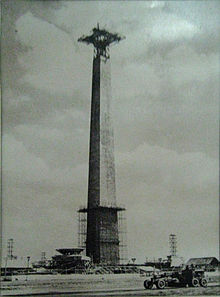
Pancoran Area in 1966
The design of this statue was based on Bung Karno's request to display the might of the Indonesian people in the aerospace field. The emphasis on the design of the statue means that to achieve might, the Indonesian nation relies on the qualities of Honest, Courageous, and Enthusiastic.

The process of installing the Dirgantara Statue was often attended by Bung Karno, so his presence was always a hassle for the state apparatus tasked with maintaining the security of the head of state. The installation tool is simple, namely using a hand-pull crane. The statue, which weighs a total of 11 tons, is divided into pieces that each weigh 1 ton.

The installation of the Dirgantara statue was finally completed at the end of 1966. The Dirgantara statue was placed in this location because it is strategic, it is the gateway to the South Jakarta area from Halim.
 

The History of the Welcome Statue to the Hotel Indonesia Roundabout

tugu-selamat-datang
Welcome Monument
The Welcome Monument is a monument located in the middle of the Hotel Indonesia Roundabout, Central Jakarta, Indonesia. This monument is a statue of a pair of humans holding flowers and waving their hands. The statue faces north which means they welcome people coming from the direction of the National Monument.


Manufacturing History
In 1962, Jakarta welcomed state guests at the Hotel Indonesia Roundabout. At that time, President Soekarno built the Welcome Monument in the context of the IV Asian Games which were held in Jakarta. The athletes and officials stayed at the Hotel Indonesia and competed at the Ikada sports complex, now the Gelora Bung Karno complex, Senayan. Senayan Stadium at that time was the largest stadium in Southeast Asia which could accommodate 120,000 spectators.

perancang-patung-selamat-datang
Henk Ngantung
The idea for making this statue came from President Soekarno and the initial design was done by Henk Ngantung who at that time was the Deputy Governor of DKI Jakarta. The height of this bronze statue from head to foot is 5 m, while the total height from the feet to the waving arms is +-7 m, and the height of the statue's feet is 10 m. The executor for making this statue was a team of sculptors from the Arca Family led by Edhi Sunarso in Karangwuni. At the time of its creation, President Sukarno was accompanied by the United States Ambassador, Howard P. Jones and the ministers visited the Edhi Sunarso studio. Making this statue takes about a year. The Selamat Datang Monument was then inaugurated by Sukarno in 1962.

The Selamat Datang Monument is located in the center of the Hotel Indonesia roundabout or HI roundabout. So named because of its location close to the Hotel Indonesia. Another accepted spelling is Bunderan HI, which is a language closer to Javanese-Betawi, a dialect closer to Jakarta's identity. This roundabout is located in the middle of the M.H. Thamrin with Jalan Imam Bonjol, Jalan Sutan Syahrir, and Jalan Kebon Kacang. In 2002, the Hotel Indonesia Roundabout was restored by PT Jaya Construction Manggala Pratama with the addition of a new fountain, new pool design, and lighting. After the reform era, the HI roundabout became a popular place for demonstrations. Every Sunday morning, when the Jakarta Car Free Day is held, this roundabout is filled with people exercising, cycling, and street vendors.

History of the Construction of the MONAS National Monument

monas
Jakarta National Monument
The National Monument or popularly abbreviated as Monas or Tugu Monas is a 132-meter (433 ft) memorial monument erected to commemorate the resistance and struggle of the Indonesian people to win independence from the Dutch East Indies colonial government. The construction of this monument began on August 17, 1961, under the order of President Sukarno, and was opened to the public on July 12, 1975. This monument is crowned with a flame covered with gold leaf which symbolizes the burning spirit of struggle. The National Monument is located right in the middle of Medan Merdeka Square, Central Jakarta. This monument and museum is open every day from 08.00 - 15.00 WIB. On Monday last week of every month is closed to the public.

The history
After the center of government of the Republic of Indonesia returned to Jakarta after previously being based in Yogyakarta in 1950 following the recognition of the sovereignty of the Republic of Indonesia by the Dutch government in 1949, President Soekarno began planning the construction of a national monument equivalent to the Eiffel Tower in the field right in front of the Merdeka Palace. The construction of the National Monument monument aims to commemorate and preserve the struggle of the Indonesian nation during the 1945 independence revolution so that it continues to inspire the next generation of inspiration and spirit of patriotism.

On August 17, 1954, a national committee was formed, and a national monument design competition was held in 1955. There were 51 works entered, but only one work made by Frederich Silaban met the criteria determined by the committee, which included depicting the character of the Indonesian nation and being able to survive for centuries. The second contest was held in 1960 but once again none of the 136 participants met the criteria. The head of the jury then asked Silaban to show his design to Sukarno. However, Sukarno did not like the design and he wanted the monument to be in the form of a phallus and a yoni. Silaban was then asked to design a monument with a theme like that, but the design submitted by Silaban was too extraordinary so the costs were very large and the state budget could not afford it, especially since the economic conditions at that time were quite bad. Silaban refused to design a smaller building and suggested that construction be delayed until Indonesia's economy improved.

Soekarno then asked the architect R.M. Soedarsono to resume the draft. Soedarsono included the numbers 17, 8, and 45, symbolizing the August 17, 1945 start of the Proclamation of Indonesian Independence, into the design of the monument. The National Memorial was then built in an area of ​​80 hectares. This monument was designed by Friedrich Silaban and R. M. Soedarsono, and construction began on August 17, 1961.

Development stage
pembangunan-monas
Construction Inspection 1963-1964
The development consists of three stages. The first stage, the period 1961/1962-1964/1965 began with the official start of construction on August 17, 1961, with Sukarno ceremoniously driving the first concrete peg.

A total of 284 concrete pegs are used as the building foundation. A total of 360 pegs were implanted earth for the foundation of the national history museum. Overall laying of the foundations was completed in March 1962. The museum wall at the base of the building was completed in October. Construction of the obelisk then began and was finally completed in August 1963. The second phase of construction took place from 1966 to 1968 due to the 1965 September 30 Movement (G-30-S/PKI) and the coup attempt, this stage was delayed. The final stage took place from 1969-1976 by adding a diorama at the history museum. Although the construction has been completed, problem still occurs, such as a water leak that flooded the museum. Monument officially opened to the public and was inaugurated on July 12, 1975, by the President of the Republic of Indonesia Soeharto. The location of the construction of this monument is known as Medan Merdeka. Monas Field has changed its name five times, namely Gambir Field, Ikada Field, Merdeka Square, Monas Square, and Monas Park. Around the monument, there is a garden, two ponds, and several open fields where exercise. On holidays, Medan Merdeka is filled with visitors who enjoy the views of the Monas Monument and carry out various activities in the park.

Design the National Monument Building
Monas is in the Development Stage
The design of the Monas Monument is based on the concept of an eternal universal pair; Linga and Yoni. The towering obelisk is the phallus which symbolizes men, the masculine element which is active and positive and symbolizes daylight. While the court of the obelisk base is Yoni which symbolizes women, the passive and negative feminine elements, and symbolizes the night.

Linga and yoni are symbols of fertility and harmonious unity that complement each other since prehistoric Indonesia. Besides that, the shape of the Monas Monument can also be interpreted as a pair of "pestle" and "Lesung", a rice pounder found in every traditional Indonesian farming household. Thus the design of Monas is full of dimensions typical of Indonesian culture. The monument consists of a 117.7-meter obelisk on a 17-meter-high square platform, the courtyard of the cup. This monument is covered with Italian marble.

The 25 x 25-meter pond in Medan Merdeka Utara Park was designed as part of the air conditioning system as well as to enhance the appearance of Monas Park. Nearby there is a fountain and a statue of Prince Diponegoro riding his horse, made of bronze weighing 8 tons. The statue was created by the Italian sculptor, Prof. Coberlato as a donation by the Honorary Consulate General, Dr. Mario Bross in Indonesia. The entrance to Monas is in the Medan Merdeka Utara park near the Prince Diponegoro statue.

The entrance is through a tunnel that is 3 m below the park and crosses the National Monument, the entrance for visitors to the Monas monument. The ticket booth is at the end of the tunnel. When visitors climb back to ground level on the north side of the National Monument, visitors can continue to walk around looking at the reliefs of the history of Indonesia's struggle; in the museum of national history through the door in the northeast corner, or straight up into the middle towards the independence of the courts or the elevator to the top of the monument.

Indonesian History Relief
patung-relief-gajah-mada
At each corner of the outer courtyard surrounding the monument, there are reliefs depicting Indonesian history. This relief begins in the northeast corner by perpetuating the glory of the Archipelago in the past; displays the history of Singhasari and Majapahit.

This relief continues chronologically clockwise to the southeast, southwest, and northwest corners. Chronologically depicting the Dutch colonial period, the resistance of the Indonesian people and Indonesian national heroes, the formation of modern organizations fighting for Indonesia's independence in the early 20th century, the Youth Pledge, the Japanese Occupation, and World War II, the proclamation of Indonesian independence followed by the Revolution and the Republican War of Independence. Indonesia, until it reaches the development period of modern Indonesia. These reliefs and statues are made of cement with a pipe or metal framework, but some of the statues and statues look unkempt and damaged due to rain and tropical weather.

Historical Diorama Museum
Museum Diorama Sejarah Indonesia
At the base of the monument at a depth of 3 meters below ground level, there is the Indonesian National History Museum. The large space of the national struggle history museum with an area of ​​80 x 80 meters, can accommodate visitors of around 500 people. This large marble-lined room has 48 dioramas on all four sides and 3 dioramas in the middle, making a total of 51 dioramas. This diorama shows the history of Indonesia from pre-history to the New Order period. This diorama starts from the northeast corner moving clockwise through the history of Indonesia; starting from prehistoric times, the times of ancient empires such as Sriwijaya and Majapahit, followed by the European colonialism followed by the resistance of the pre-independence national heroes against the VOC and the Dutch East Indies government. The dioramas continued until the time of the early 20th-century Indonesian national movement, the Japanese occupation, the war of independence, and the revolutionary period, until the New Order era during the Suharto era.

View of the City of Jakarta from the top of the National Monument
 

August 15, 2015

The Heroes of the Revolution in Indonesia

Pancasila Sakti Monument - Crocodile Hole - Jakarta

Hero of the Revolution is a title given to a number of military officers who died in the G30S tragedy that occurred in Jakarta and Yogyakarta on September 30, 1965. Since the enactment of Law Number 20 of 2009, this title has also been recognized as a National Hero. These heroes include:

1. General Ahmad Yani
jendral ahmad yani
TNI General Posthumous Ahmad Yani (also spelled Achmad Yani; born in Purworejo, Central Java, 19 June 1922 - died in Lubang Buaya, Jakarta, 1 October 1965 at the age of 43) was the commander of the Indonesian National Armed Forces and was killed by members of the September 30 while trying to kidnap him from his home.

Ahmad Yani was born in Jenar, Purworejo, Central Java on 19 June 1922 into the Wongsoredjo family, a family that worked in a sugar factory run by a Dutch owner. In 1927, Yani moved with his family to Batavia, where his father now worked for the Dutch General. In Batavia, Yani worked his way through primary and secondary education. In 1940, Yani left high school to undergo military service in the colonial government's Dutch East Indies army. He studied military topography in Malang, East Java, but this education was interrupted by the arrival of Japanese troops in 1942. At the same time, Yani and his family moved back to Central Java.

In 1943, he joined the Japanese-sponsored Peta (Defenders of the Homeland) army and underwent further training in Magelang. After completing this training, Yani requested to be trained as a Peta platoon commander and was transferred to Bogor, West Java to receive training. When finished, he was sent back to Magelang as an instructor.

Military Career
After Independence Yani joined the fledgling republican army and fought against the Dutch. During the first months after the Declaration of Independence, Yani formed a battalion with himself as Commander and led it to victory against the British in Magelang. Yani then followed this up by successfully defending Magelang against the Dutch when it tried to take over the city, earning him the nickname "Savior of Magelang". Another notable highlight of Yani's career during this period was the series of guerilla offensives he launched in early 1949 to distract the Dutch whilst Lieutenant Colonel Suharto prepared for the 1 March General Offensive to be directed at Yogyakarta.

After Indonesian independence was recognized by the Dutch, Yani was transferred to Tegal, Central Java. In 1952, he was called back to action against Darul Islam, a rebel group that was trying to establish a theocracy in Indonesia. To deal with this rebel group, Yani formed a special forces group called The Bull Raiders. The decision to summon Yani paid dividends and over the next 3 years, Darul Islam forces in Central Java suffered one defeat after another.

In December 1955, Yani left for the United States to study at the Command and General Staff College, Fort Leavenworth, Texas. Returning in 1956, Yani was transferred to the Army Headquarters in Jakarta where he became a member of the General staff to Abdul Haris Nasution. At Army Headquarters, Yani served as Logistics Assistant to the Army Chief of Staff before becoming Deputy Army Chief of Staff for Organization and Personnel.

In August 1958, he ordered Operation 17 August against the Revolutionary Government of the Republic of Indonesia rebels in West Sumatra. His troops managed to recapture Padang and Bukit Tinggi, and this success led to his being promoted to deputy head of the 2nd Army of staff on 1 September 1962, and then Chief of the Army Staff on 13 November 1963 (automatically becoming a member of the cabinet), replacing General Nasution.

End of life
As President, Soekarno moved closer to the Indonesian Communist Party (PKI) in the early '60s. Yani, who was fiercely anti-communist, became very wary of the PKI, especially after this party declared its support for the creation of a fifth force (besides the four armed forces and the police) and Sukarno tried to impose his Nasakom (Nationalism-Religion-Communism) doctrine on the military. Both Yani and Nasution procrastinated when ordered by Sukarno on 31 May 1965 to prepare plans to arm the people.

In the early hours of 1 October 1965, the 30 September Movement attempted to kidnap seven members of the Army general staff. A team of about 200 people surrounded Yani's house at Jalan Latuhahary No. 6 on the outskirts of Jakarta Menteng, Central Jakarta. Usually, Yani had eleven soldiers guarding his home. His wife later reported that a week earlier an additional six men had been assigned to him. These men were from the command of Colonel Latief, who Yani knew, was one of the main plotters in the 30 September Movement. According to Yani's wife, the additional men did not appear for duty that night. Yani and his children were sleeping in his house while his wife was out celebrating her birthday with a group of friends and relatives. She later recounted that as she was leaving the house at around 11pm, she saw someone sitting across the street as if keeping the house under surveillance. He didn't think anything of it at the time, but after the events of that morning, he wondered differently. Also, from about 9 o'clock on the evening of September 30, there were a number of phone calls to the house at intervals, which when answered would either be met with silence or a voice would ask what time it was. The calls continued until about 1am and Mrs. Yani said she had a hunch something was wrong that night.

Yani spent the night with several meetings, at 7 pm he received a colonel from KOTI, the Supreme Operations Command. General Basuki Rahmat, divisional commander in East Java, then arrived from his base in Surabaya. Basuki came to Jakarta to report to Yani on his concerns about increasing communist activity in East Java. Complimenting his report, Yani asked him to accompany him to a meeting the next day with the President to present his report.

When the kidnappers came to Yani's house and told him that he would be brought before the president, he asked for time to shower and change. When the kidnapper refused he became angry, slapped one of the kidnapping soldiers, and tried to close his front door. One of the kidnappers then opened fire, killing him spontaneously. His body was taken to Lubang Buaya on the outskirts of Jakarta and, along with those of the other slain generals, hidden in a disused well.

Yani's body, and those of the other victims, were exhumed on October 4, and all were given a state funeral the following day, before being buried at the Heroes Cemetery in Kalibata. On the same day, Yani and his colleagues were officially declared Heroes of the Revolution by Presidential Decree No. 111/KOTI/1965 and were posthumously raised in rank from Lieutenant General to 4th star general (Indonesian: General Posthumous).

Yani's mother and children moved out of the house after Yani's death. Yani's mother helped turn their former home into a public museum which stands mostly as it was in October 1965, including the bullet holes in the doors and walls, and with the furnishings of the house then. Currently, many cities in Indonesia have roads named after Yani. In addition, his name is immortalized for Achmad Yani International Airport in Semarang.

2. Lieutenant General Suprapto
jendral suprapto
Lieutenant General TNI Posthumous R. Suprapto (born in Purwokerto, Central Java, 20 June 1920 - died in Lubang Buaya, Jakarta, 1 October 1965 at the age of 45) was an Indonesian national hero. He was one of the victims of the G30SPKI and was buried at the Kalibata Heroes Cemetery, in Jakarta.

Suprapto, who was born in Purwokerto, on June 20, 1920, is arguably almost the same age as Commander-in-Chief Sudirman. He was only four years younger than the Great Commander. His formal education after graduating from MULO (junior high school level) was AMS (senior high school level) Part B in Yogyakarta which he completed in 1941.

Around that year the Dutch East Indies government declared a militia in connection with the outbreak of the Second World War. It was then that he entered military education at the Koninklijke Militaire Akademie in Bandung. He could not complete this education until he was finished because the Japanese troops had rushed to land in Indonesia. By the Japanese, he was captured and imprisoned, but then he managed to escape.

After his escape from prison, he filled his time by taking courses at the Youth Training Center, body and mind training, and syuisyintai. And after that, he worked in the Community Education Office.
At the beginning of independence, he was one of those who participated in the struggle and managed to seize weapons from the Japanese troops in Cilacap. After that, he later joined the People's Security Army in Purwokerto. That was the first time he officially entered the army, because before that, even though he had participated in the struggle against the Japanese army, such as in Cilacap, that struggle was only a people's struggle carried out by the Indonesian people in general.

While in the People's Security Army (TKR), he made history by participating in the battle in Ambarawa against the British army. At that time, his troops were led directly by Commander Sudirman. He was also one of the assistants of the Commander in Chief.

After Indonesia received recognition of sovereignty, he often changed assignments. First of all, he was assigned as Head of Army and Territorial Staff (T&T) IV/ Diponegoro in Semarang. From Semarang, he was then drawn to Jakarta to become an Army Staff, then to the Ministry of Defence. And after the PRRI/Permesta rebellion died down, he was appointed Deputy Chief of Staff of the Army for the Sumatra region based in Medan. While in Medan, his task was very heavy because he had to keep the rebellion like before from happening again.

3. Lieutenant General MT. Haryono
jendral MT.Haryono
Lieutenant General TNI Posthumous Mas Tirtodarmo Haryono (born in Surabaya, East Java, January 20, 1924 - died in Lubang Buaya, Jakarta, October 1, 1965, at the age of 41) was one of the heroes of the Indonesian revolution who was killed in the G30S incident. He was buried at TMP Kalibata - Jakarta.

The three-star general who was born in Surabaya, on January 20, 1924, previously received his education at ELS (elementary school level) and then passed on to HBS (generally high school level). After graduating from HBS, he entered Ika Dai Gakko (a medical school during the Japanese occupation) in Jakarta but did not graduate.

When the independence of the Republic of Indonesia was proclaimed, he, who was in Jakarta, immediately joined other youths to fight for independence. At the same time, he continued this struggle by joining the People's Security Army (TKR). At the start of his appointment, he earned the rank of Major.

During the war to defend independence, namely between 1945 and 1950, he was often transferred. First of all, he was placed in the Liaison Office, then as Secretary of the Indonesian Delegation in negotiations with the British and the Dutch. Once he was also appointed as Secretary of the State Defense Council and at another time as Permanent Representative to the Ministry of Defense for Armistice Affairs. And when the Round Table Conference (KMB) was held, he was the Secretary of the Indonesian Military Delegation.

4. Lieutenant General S. Parman
jendral s-parmanLieutenant General TNI Posthumously Siswondo Parman (born in Wonosobo, Central Java, August 4, 1918, died in Lubang Buaya, Jakarta, October 1, 1965, at the age of 47) or better known as S. Parman was one of the heroes of the Indonesian revolution and Indonesian military figure. He died during the events of the September 30th Movement and was awarded the posthumous title of Lieutenant General. He was buried at TMP Kalibata, Jakarta.

Parman was an intelligence officer, so he knew a lot about PKI activities. He was one of the officers who rejected the PKI's plan to form a Fifth Army consisting of workers and peasants. His rejection and his position as an intelligence official who knew a lot about the PKI made him the victim of being kidnapped by the Tjakrabirawa Regiment led by Serma Satar. It is suspected that his kidnapping was arranged by his own older brother, namely Ir. Sakirman was a high-ranking official at the PKI CC Politburo at that time.

Background
The general education he has attended elementary school, high school, and the College of Medicine. But before completing his doctorate, the Japanese army had occupied the Republic so he did not even reach the title of doctor.

After not being able to continue medical school, he worked for the Bureau of Kempeitai. There he was suspected by the Japanese so he was arrested, but not long after that, he was released again. After that, he was instead sent to Japan to study under Kenpei Kasya Butai. Upon returning to his homeland he returned to work at the Kempeitai Bureau.

His early career in the military began with joining the People's Security Army (TKR), namely the Indonesian Army which was formed after the proclamation of independence. At the end of December 1945, he was appointed Chief of Staff of the Army Police Headquarters (PT) in Yogyakarta.

During the Second Dutch Military Aggression, he also fought in guerrilla warfare. In December 1949, he was assigned as Chief of Staff for the Military Governor of Greater Jakarta. One of his successes at that time was uncovering the secrets of the Ratu Adil Armed Forces (APRA) movement, which was going to carry out its operations in Jakarta under the leadership of Westerling. Furthermore, in March 1950, he was appointed chief of Staff G. And a year later sent to the United States to attend education at the Military Police School.

Upon returning from the United States, he was assigned to the Ministry of Defense for some time and then was appointed Military Attache of the Republic of Indonesia in London, England in 1959. Five years later, namely in 1964, he was assigned the role of Assistant I Minister/Commander of the Army (Men/Pangad ) with the rank of Major General.

When he was Assistant I Minister/Commander of the Army (Men/Pangad), the influence of the PKI was also rife in Indonesia. This Communist Party feels close to President Soekarno and some people have been influenced. However, as an intelligence officer, S. Parman previously had much knowledge of the secret activities of the PKI. So when the PKI proposed that the workers and peasants be armed or what was called the Fifth Force. He along with most of the other Army Officers rejected the suggestion which had ulterior motives. It was on this basis that the PKI later despised him. And finally, when the G30S incident occurred, he became a victim because he was one of the enemies of the PKI. S. Parman was kidnapped from his house, killed at Lubang Buaya, and hidden in the Lubang Buaya well.

5. Major General Pandjaitan
DI. Pandjaitan
Major General TNI Posthumous Donald Isaac Panjaitan (born in Balige, North Sumatra, 19 June 1925 - died in Lubang Buaya, Jakarta, 1 October 1965 at the age of 40) was one of the heroes of the Indonesian revolution. He was buried at the Kalibata Heroes Cemetery, Jakarta.

Panjaitan was born in Balige, Tapanuli, June 19, 1925. His formal education started in elementary school, then entered junior high school, and finally at senior high school. When he graduated from high school, Indonesia was under Japanese occupation. So when he entered the military he had to take Gyugun training. After training, he was assigned as a Gyugun member in Pekanbaru, Riau until Indonesia declared its independence.

When Indonesia won independence, he and other youths formed the People's Security Army (TKR) which later became the TNI. At TKR, he was first assigned as a battalion commander, then became the Education Commander of the IX/Banteng Division in Bukittinggi in 1948. Then he became Chief of General Staff IV (Supply) of the Sumatran Army Command. And when the Dutch Troops carried out their Second Military Aggression, he was appointed as the Leader of the Supplies for the Struggle of the Emergency Government of the Republic of Indonesia (PDRI).

Along with the end of the Second Dutch Military Aggression, Indonesia also received recognition of sovereignty. Panjaitan himself was later appointed Chief of Staff for Army and Territory Operations (T&T) I Bukit Barisan in Medan. Then he was transferred again to Palembang to become Head of Staff of T & T II/Sriwijaya.

After attending the Military Attache (Milat) course in 1956, he was assigned as the Indonesian Military Attache in Bonn, West Germany. When his term of service ended as Military Attache, he returned to Indonesia. But not long after that, namely in 1962, this officer who had studied at the Associated Command and General Staff College, United States of America, was appointed Assistant IV to the Minister/Commander of the Army (Men/Pangad). This was the last position he held when the G 30/S PKI incident occurred.

When he served as Assistant IV to the Men/Army Commander, he made a special achievement for his success in uncovering the secrets of arms shipments from the People's Republic of China (PRC) to the PKI. From there it was known that the weapons were put in crates of building materials to be used in the construction of the Conejo (Conference of the New Emerging Forces) building. The weapons were needed by the PKI, which was actively preparing to launch an uprising.

In the early hours of 1 October 1965, a group of members of the 30 September Movement left Lubang Buaya on the outskirts of Jakarta. They forced the gates of Panjaitan's house on Jalan Hasanudin, Kebayoran Baru, South Jakarta, shot and killed one of the servants sleeping on the ground floor of the two-story house, and called for Panjaitan to come downstairs. Two youths namely Albert Naiborhu and Viktor Naiborhu were seriously injured during resistance when D.I. Panjaitan was kidnapped, and not long after that Albert died. After the attacker threatened his family, Panjaitan came down in full uniform while surrendering to God Almighty to fulfill the call of duty which was manipulated by the PKI mob, and shot dead. his body was loaded into a truck and brought back to the movement's headquarters in Crocodile Hole. Later, the body and those of his murdered comrades were hidden in an old well. The bodies were found on October 4, and all were given a state funeral the following day. Panjaitan was given a posthumous promotion to Major General and made a Hero of the Revolution.

6. Major General Sutoyo Siswomiharjo
jendral sutoyo siswomiharjo
Major General TNI Posthumous Sutoyo Siswomiharjo (born in Kebumen, Central Java, August 28, 1922. died in Lubang Buaya, Jakarta, October 1, 1965, at the age of 43) was a high-ranking TNI-AD officer who was kidnapped and later killed in the events of the 30 September Movement in Indonesia.

Sutoyo was born in Kebumen, Central Java. He finished school before the Japanese invasion in 1942, and during the Japanese occupation, he studied government administration in Jakarta. He then worked as a government employee in Purworejo but resigned in 1944.

After the proclamation of Indonesian independence in 1945, Sutoyo joined the People's Security Army Police (TKR), the forerunner of the Indonesian National Armed Forces. This later became the Indonesian Military Police. In June 1946, he was appointed adjutant to Colonel Gatot Soebroto, commander of the Military Police. He steadily rose through the ranks within the Military Police, and in 1954 he became chief of staff at Military Police Headquarters. He held this position for two years before being appointed assistant military attache at the Indonesian embassy in London. After training at the Army Staff and Command College in Bandung from 1959 to 1960, he was appointed Army Inspector of Justice, then due to his legal experience, in 1961 he became judicial inspector/chief military prosecutor.

In the early hours of 1 October 1965, members of the 30 September Movement led by Sergeant Major Surono entered Sutoyo's house on Jalan Sumenep, Menteng, Central Jakarta. They entered through the garage at the side of the house. They forced the maid to hand over the key, entered the house, and said that Sutoyo had been summoned by President Sukarno. They then took him to their base at Crocodile Hole. There, he was killed and his body thrown into a disused well. Like those of his other murdered colleagues, his body was recovered on 4 October and he was given a state funeral the following day. He was posthumously promoted to Major General and made a Hero of the Revolution.

7. Captain Pierre Tendean
kapten pierre tendeanPosthumous CZI Captain Pierre Andreas Tendean (born 21 February 1939 - died 1 October 1965 at the age of 26) was an Indonesian military officer who was one of the victims of the 30 September Movement in 1965. He began his military career by becoming an intelligence officer and was later appointed as adjutant General Abdul Haris Nasution with the rank of the first lieutenant, he was promoted to captain posthumously after his death. Tendean was buried at the Kalibata Heroes Cemetery and along with six other G30S victim officers, he was declared a Hero of the Indonesian Revolution on October 5, 1965.

Pierre Andreas Tendean was born to Dr. A.L Tendean, a doctor with Minahasa blood, and Cornet M.E, an Indo woman with French blood, on 21 February 1939 in Batavia (now Jakarta), Dutch East Indies. Pierre was the second of three children; his brother and sister respectively named Mitze Farre and Rooswidiati. Tendean attended elementary school in Magelang, then continued his junior and senior high school studies in Semarang where his father served. Since childhood, he really wanted to become a soldier and enter a military academy, but his parents wanted him to become a doctor like his father or an engineer. Because of his strong determination, he managed to join the Army Engineering Academy (ATEKAD) in Bandung in 1958.

After graduating from the military academy in 1962 with the rank of second lieutenant, Tendean became the Platoon Commander of the Combat Engineering Battalion 2 Kodam II/Bukit Barisan in Medan. A year later, he attended an intelligence school in Bogor. After graduating from there, he was assigned to the Central Intelligence Service of the Army (DIPIAD) to become a spy for Malaysia in connection with the confrontation between Indonesia and Malaysia; he was in charge of leading a group of volunteers in several areas to infiltrate Malaysia. On April 15, 1965, Tendean was promoted to the first lieutenant and assigned as adjutant to General Abdul Haris Nasution.

On the morning of 1 October 1965, troops from the 30 September Movement (G30S) came to Nasution's house with the aim of kidnapping him. Tendean, who was sleeping in the back room of General Nasution's house, was awakened by the sound of gunshots and commotion and immediately ran to the front of the house. He was caught by the G30S mob who mistook him for Nasution because the house was dark. Nasution himself managed to escape by jumping over a fence. Tendean was then taken to a house in the Crocodile Hole area with six other high-ranking officers. He was shot dead and his body was thrown into an old well with the bodies of six other officers.

Tendean and six other officers were buried at the Kalibata Heroes Cemetery, in Jakarta. To appreciate his services, Tendean was awarded the title Hero of the Indonesian Revolution on October 5, 1965, based on Presidential Decree No. RI. 111/KOTI/Tahun 1965. After his death, he was posthumously promoted to captain. A number of streets are also named after him, including Manado, Balikpapan, and Jakarta

8. AIP Karel Satsuit Tubun
KS TubunAdjutant Police Inspector Two Posthumously Karel Satsuitubun (born in Southeast Maluku, October 14, 1928, died in Jakarta, October 1, 1965, at the age of 36 years) is an Indonesian national hero who was one of the victims of the September 30 Movement in 1965. He was the bodyguard of J, Leimena. He was buried at TMP Kalibata, Jakarta. Because he was a victim of the September 30th Movement, he was made a Hero of the Revolution.

Karel Satsuitubun' was born in Tual, Southeast Maluku on October 14, 1928. When he was an adult he decided to join the POLRI. He was also accepted, then attended Police Education. After graduating, he was placed in the Ambon Mobile Brigade Unit with the rank of Police Agent Class Two, or now Bhayangkara Dua Police. He was also drawn to Jakarta and has the rank of First Class Police Agent or now Bhayangkara One Police. When Bung Karno announced the Trikora, which demanded that West Irian be returned to Indonesia from Dutch hands. Immediately a Military Operation was carried out, and he also participated in the struggle. After West Irian was successfully returned, he was given the task of guarding the residence of the Deputy Prime Minister, Dr. J. Leimena in Jakarta. Gradually he rose to the rank of Police Brigadier.

Because he considered the leadership of the Army as the main obstacle to his goals. So the PKI planned to kidnap and kill a number of army officers who were considered to be hindering its aspirations. One of the targets was General A.H. Nasution, who is next door to Dr. J.Leimena. The movement started when he got the morning guard duty. So, he took himself to sleep. The kidnappers came, first they locked up Dr.'s house guards. J.Leimena. Because he heard the noise, K. Satsutubun woke up with a gun and he tried to shoot the PKI gang. Unfortunately, the mob also shot him. Because it was unbalanced, K.satsuitubun died instantly after the kidnapper's bullet penetrated his body.

For all his services so far, as well as being a victim of the September 30th Movement, the government included him as one of the Heroes of the Indonesian Revolution, along with General Ahmad Yani, Lt. Gen. R. Suprapto, Lt. Gen. M.T. Haryono, Lieutenant General S. Parman, Major General Sutoyo, Major General D.I. Pandjaitan, Brigadier General Katamso, Colonel Sugiono and CZI Captain Pierre Tendean. In addition, he was also promoted to Assistant Inspector Two Police. His name is also now immortalized as the name of a Republic of Indonesia Warship from the Ahmad Yani class frigate with the name KRI Karel Satsuitubun.

The Indonesian government pays tribute to Halim's services and struggle, by conferring the title of National Hero and immortalizing his name at Karel Satsuitubun Airport in Pelabuhan Ratu. The government also immortalized his name on the KRI Karel Satsuitubun warship.

9. Brigadier General Katamso Darmokusumo
Brigadir jendral katamso darmokusumoBrigadier General Katamso Darmokusumo Posthumously (born in Sragen, Central Java, on 5 February 1923 died in Yogyakarta, on 1 October 1965 at the age of 42) is one of Indonesia's national heroes. Katamso was one of the figures who were killed in the events of the September 30th Movement. He was buried at the Kusuma Negara Heroes Cemetery, Yogyakarta.


10. Colonel Sugiono
kolonel sugiono
Colonel Infantry (Posthumously) R. Sugiyono Mangunwiyoto (born in Gedaren, Sumbergiri, Ponjong, Gunung Kidul, August 12, 1926, died in Kentungan, Yogyakarta, October 1, 1965, at the age of 39) was an Indonesian hero who was a victim of the 30th Movement September.
Cabbage. Sugiyono is married to Supriyati. They had six sons; R. Erry Guthomo (b. 1954), R. Agung Pramuji (b. 1956), R. Haryo Guritno (b. 1958), R. Danny Nugroho (b. 1960), R. Budi Winoto (b. 1962), and R. Ganis Priyono (b. 1963); and one daughter, Rr. Sugiarti Takarina (b. 1965), was born after her father died. The name Sugiarti Takarina was given by President Soekarno. He was buried at TMP Semaki, Yogyakarta.