Discover the world’s most breathtaking destinations, travel tips, cultural insights, and unforgettable adventures. Join us as we explore hidden gems and iconic landmarks across the globe.
The branch of study known as the history of mathematics is the investigation of the origins of discoveries in mathematics and, to a lesser extent, the investigation of the methods and notation of mathematics in the past
In the beginning, the big island of Krakatau, which we usually call by the name of Mount Krakatau, was a mountain (ancient Mount Krakatau) which has a height of about 2000 meters above sea level with a circle of beaches of about 11 km and a radius of about 9 km2.
Complete Profile of KH Abdul Wahab Hasbullah: The Initiator of Nahdlatul Ulama and a National Hero
KH. Abdul Wahab Hasbullah (Mbah Wahab) is a charismatic cleric known as "Founding Father of Nahdlatul Ulama (NU)". He was a multi-talented figure: a skilled organizer, a smart politician, a freedom fighter, and a modern-minded Islamic boarding school educator.
Biodata and Genealogy
Full name: KH.Abdul Wahab Hasbullah
Born: March 31, 1888, in Tambakberas, Jombang, East Java
Died: December 29, 1971 (Age 83)
Parent: The first son of KH Hasbullah Said (the caretaker of the Tambakberas Islamic Boarding School) and Nyai Hj. Lathifah
Family relationship: His lineage meets KH. Hasyim Asy'ari's with the same grandfather, namely Kiai Shihah.
Educational History: A 20-Year Journey of Knowledge
Mbah Wahab's youth was spent studying from one Islamic boarding school to another for approximately 20 years:
Primary Education:He was directly guided by his father at the Tambakberas Islamic Boarding School until the age of 13.
Islamic Boarding Schools in Java: Studied at the Langitan Islamic Boarding School (Tuban), Mojosari (Nganjuk), Tawangsari (Sepanjang), and then studied with Syaikhona Kholil Bangkalan (Madura).
Tebuireng Islamic Boarding School: He became a direct student of Hadratusy-syekh KH. Hasyim Asy'ari.
Mecca (1914): Studied for 5 years in the holy land under the guidance of Sheikh Mahfudz at-Tarmasi and Sheikh Said al-Yamani.
Key Role in the Establishment of Nahdlatul Ulama (NU)
Mbah Wahab was the main driving force behind the birth of NU on January 31, 1926. Before NU was officially established, he initiated several pioneering organizations:
Tashwirul Afkar (1914):Intellectual discussion forum and debate course for Islamic students (santri) in Surabaya.
Nahdlatul Wathan (1916):An Islamic youth organization that instilled a sense of nationalism (Revival of the Homeland).
Nahdlatut Tujjar (1918):An organization for the economic empowerment of Islamic students.
Hijaz Committee:A delegation sent to Mecca to fight for Freedom of belief in the Islamic sect before King Ibn Saud.
Contribution to the Nation and Independence
He fought not only on the pulpit, but also on the battlefield and in diplomacy:
Commander of the Hizbullah Army: Led the Islamic students' army in fighting the Japanese and Dutch colonialists.
Creator of the Song "Ya Lal Wathon": A nationalistic song composed in 1934 to foster love for the homeland among Islamic students.
Statesman: Served as a member of the Supreme Advisory Council (DPA) and actively quelled political unrest during the era of President Sukarno.
Pioneer of Freedom Thinking: Initiating a two-body leadership system in NU (Syuriyah and Tanfidziyah) to unite the old and young.
Awards and Legacy
For his extraordinary services to the independence and integrity of the Republic of Indonesia, KH. Abdul Wahab Hasbullah was declared a National Hero of Indonesia by President Joko Widodo on November 7, 2014. He was buried in the Bahrul Ulum Tambakberas Islamic Boarding School complex, Jombang.
Certificate of Practice "Huwal Habib"
One of the most famous ijazas of practice from KH. Abdul Wahab Hasbullah is the recitation of excerpts from the Qasidah Burdah, specifically the verse "Huwal Habib." Mbah Wahab often gave this ijaza to his students at the Bahrul Ulum Islamic Boarding School in Tambakberas, especially when facing critical situations or major matters for the nation and Nahdlatul Ulama.
Waktu Pengamalan: Usually read regularly after every Maghrib prayer.
Goals/Benefits: Used as an inner effort to ask for God's help so that all matters are made easier, kept away from disaster, and given smoothness in the struggle.
How to Practice (Based on the Tambakberas Tradition):
According to the caregivers at the Tebuireng and Tambakberas Islamic Boarding Schools, this diploma often begins with tawasul:
Tawasul (Send Fatihah):Especially to the Prophet Muhammad SAW, his friends, Sheikh Abdul Qadir Al-Jailani, and KH Abdul Wahab Hasbullah.
Reading Short Letters: Al-Fatihah, Al-Ikhlas, An-Nas, Al-Falaq, dan Ayat Kursi.
Reading the Burdah Prayer: Bait Huwal Habib is read repeatedly according to direction or need.
Mbah Wahab's Wise Message for Today's Generation
Tentang Persatuan: "There is no weapon sharper than unity." (This message he often conveyed to remind us how important brotherhood is amidst differences).
About Courage and Struggle: "Be a kiai with a warrior's soul, don't be a kiai who just waits for gifts."
About Love for the Homeland (Hubbul Wathon): "Indonesia is our home. Protecting it is part of our faith, defending its honor is the duty of every soul." (This spirit is clearly reflected in the lyrics of the song Ya Lal Wathon, which he composed).
About the Changes of the Times: "We must continue to move with the times, but never let go of the roots of our traditions and the noble values of our religion."
Message for Students and Youth: "Students must be able to be a light in the midst of darkness, not just spectators on the sidelines of history."
The Condition of Parents After Death and Waiting for Prayers from Their Children (According to the Qur'an and Hadith)
Death is not the end of everything, but the beginning of a new life in the realm of Barzakh. In Islamic teachings, the souls of the deceased remain alive in a different dimension. They can feel happiness or sadness according to their deeds during their lifetime. For parents who have passed away, there is one thing they are really looking forward to from this world: prayers from their children.
1. Life After Death According to the Qur'an
Allah ﷻ explains in the Qur'an that after death, humans will enter the realm of barzakh, a place where they will wait until the day of resurrection.
“And before them is a barrier (barzakh) until the day they are raised up.”(QS. Al-Mu’minun: 100)
This verse confirms that after death, a person’s soul is in a realm of waiting. There, they can receive the blessings of the grave or the punishment of the grave, depending on their deeds in this world.
2. Faithful Parents Will Get Favors in the Grave
The Messenger of Allah ﷺ said:
“If a servant is placed in his grave, and he answers the angel's question correctly, then the gates of heaven will be opened for him. He will smell its smell and feel calm.” (HR. Ahmad and Abu Dawud)
For parents who believe, their grave becomes a garden of the gardens of paradise. Their souls will find peace, especially if they have pious children who always pray for them.
3. Children's Prayers: The Most Beautiful Gift for Parents
The Prophet ﷺ said:
“When a son of Adam dies, his good deeds come to an end except for three things: ongoing charity, beneficial knowledge, and a righteous child who prays for him.” (Narrated by Muslim)
This hadith shows that pious children's prayers not only reach their parents, but also become a cause of happiness and light for them in the grave. Every time a child reads Al-Fatihah, istighfar, or alms in the name of their parents the reward is immediately sent to their souls.
4. The Spirit of Parents Awaits Prayers from the World
In several narrations, it is mentioned that the spirit of a deceased person knows the deeds of his family in the world. Scholars explain that the spirit of a believer feels happy when he receives prayers, and sad when his family forgets to pray for him.
Imam As-Suyuthi in Syarh As-Sudur wrote:
“Indeed, the deceased rejoices in the good deeds done by his family, and the reward of those deeds is conveyed to them.”
Therefore, children's prayers are very meaningful to parents. They await the sending of prayers like someone who awaits good news from a loved one.
5. How Children Send Prayers for Their Parents
Here are some simple practices that can be done to help parents find peace in the grave:
Read Al-Fatihah and dedicate it to the souls of both parents.
➤ “Ilā ruhi abī wa ummī, Al-Fātiḥah…”
Reading istighfar:
➤ “Allahummaghfir liwalidayya warhamhuma kama rabbayani shaghira”
Give charity on behalf of parents
Any kind of charity, whether food, money, or assistance to those in need.
Maintain good deeds and good morals, because that will make your parents' souls proud in the afterlife.
6. Signs of Parents' Happiness in the Grave
Some signs of parents' souls being at peace and happy in the afterlife according to scholars:
Their children are diligent in praying and doing good deeds.
There is peace in the family after their departure.
A sweet dream of seeing parents smiling or dressed in white.
My heart feels at peace every time I pray for them.
These signs are good signs that the child's prayers are accepted and the parents' souls are at peace.
Conclusion
After passing away, our parents do not just disappear. They are waiting for prayers, reading Al-Fatihah, and alms from their children. As the Messenger of Allah ﷺ said, “Pious children who pray for their parents” is a deed that continues to flow in rewards and is a source of happiness in the grave.
So, don't let a day go by without praying for them, because a child's prayer is the light that illuminates a parent's grave.
"O mankind, eat of what is lawful and good on earth and do not follow the footsteps of Satan. Indeed, he is to you an open enemy.".(QS. Al-Baqarah [2]: 168)
In this life, you must recognize the real enemy within you. Your enemy is not a jealous friend, a hateful sibling, or anyone else who wants to harm or bring you down. But know that your true enemy is Satan, who will always lead you astray and want you to be with him in hell. Furthermore, the enemy you must fight is your own lust.
Demon
Satan and lust are interconnected, leading humans to sin and eternal damnation with them in Hell. Satan will never tire of tempting the descendants of the Prophet Adam, in accordance with his request to Allah SWT when he was expelled from Paradise, which reads:
"He (Satan) replied, "Because You have led me astray, I will surely hinder them from Your straight path. Then I will surely come at them from before them, from behind them, from their right, and from their left. You will not find most of them grateful."(QS. Al-A’raf [7]: 16-17).
The meaning of the verse above is that Allah made Iblis/Satan as a lost person because he had denied Allah's command to respect the Prophet Adam AS and was arrogant, considering himself more noble than the Prophet Adam. After that Allah expelled Iblis from heaven and Iblis also said that he would always bother the children of Prophet Adam to deny Allah and be their friend forever in hell. Iblis will do anything to be able to lead humans astray, he will surround humans from the front, back, right side, left side until the humans follow them so that they are not saved and perish like Iblis.
How could Allah Subhanahu Wa Ta'ala lead Satan astray? Allah is not deficient!
So the answer is that the will (Iradah) of Allah Subhanahu Wata'ala is twofold: Iradah kauniyah and Iradah Syar'iyah. Iradah Kauniyah is the will that Allah Subhanahu Wata'ala desires to happen in the universe, but it is not necessarily something that Allah likes, while Iradah Syar'iyah is a desire that Allah likes, but it is not necessarily something that happens. All of this happens because of the wisdom and justice of Allah Subhanahu Wata'ala. Allah is the one who knows all wisdom and Allah is just in all that He does. This is the attribute of Allah, the most perfect.
Therefore, Imam al-Qurthubi (may Allah have mercy on him) emphasized this in his interpretation. He Rahimahullah said: "The Ahlussunnah school of thought states that it was Allah Azza wa Jalla who made him go astray and created disbelief in him." Therefore, in this verse the actions that made the devil go astray are attributed to Allah Azza wa Jalla. And this is what is true. Nothing exists unless it is the creation of Allah Azza wa Jalla which comes from the will of Allah Subhanahu wa Ta'ala. The al-Imamiyah, al-Qadariyah and other sects have disobeyed the shaykh (their teacher), namely the devil, in that they obey the devil in everything that the devil has decorated for them, but do not obey him in this matter. They said, "The devil has made mistakes. And he is often wrong, because he has attributed error to his Rabb. Glory be to Allah from that." So we say to them (followers of these heretical sects), 'If the devil (is like that), he really often makes mistakes, then what do you think about the words of the Prophet who was noble and ma'shûm (protected from mistakes), namely Prophet Nuh Alaihissallam. He said to his people:
"My advice will not be useful for you even if I want to advise you, if Allah wants to lead you astray. He is your Lord and to Him you will be returned." (QS. Hud [11]: 34)
Who Can Be Safe from Satan/Satan?
Allah SWT. Says in Surah Ash-Shaad Verses 82-85 which means:
Allah SWT. Says in Surah Ash-Shaad Verses 82-85 which means:
People who can be safe from Satan are those who truly believe in Allah and do not worship anything other than Allah, people who maintain their behavior and faith. We must know that the devil will always tempt people until they follow him, but those who remain obedient to Allah and always draw closer to Him will be the ones who will survive the temptation of the devil/demons and they will enter His heaven with those who obey, but for those who associate partners with Allah and worship Satan, they will forever be in Hell with the devils they worship/worship.
Lust
Imam Ibn Qoyyim Al-Jauziyyah (rahimahullah) said: "Lust is the soul's inclination towards something that aligns with its desires" (Asbabut Takhallaush minal hawa, Ibn Qoyyim Al-Jauziyyah, p. 3).
Lust is also called Al-Hawa because it can lead a person to disgrace or hell. People who follow their lusts essentially seek false pleasures and momentary satisfaction in this world, without considering the consequences they will face. Lust arises when we desire something and must achieve it by any means, even if it conflicts with religion. Examples include satisfying desires through sex, wanting to eat and drink, wanting to be angry with someone, and many other examples of lust.
Is Lust a Despicable Thing?
Ibnu Qoyyim Al-Jauziyyah Rahimahullah explained in his book that lust was created in humans in order to maintain their survival. Because, if there is no appetite to eat, drink and marry, humans will certainly die and become extinct, because they do not eat, drink and marry. Lust drives humans to achieve the things they want, while anger prevents them from things that bother them in their lives. So lust should not be criticized or praised absolutely without exception. Just as anger cannot be criticized or praised absolutely either.
Allah denounces ittiba'ul hawa (following one's desires) in several verses in the Al-Qur'an, including His words in Surah Al-Jatsiyah and Al-Qashash.
"Do you know (Prophet Muhammad), the person who made his desires his God and was allowed to go astray by Allah with His knowledge, Allah has locked his hearing and heart and put a lid on his sight, who is able to give him guidance after Allah (allowed him to go astray)? Have you (O humans) not learned a lesson?" (QS. Al-Jaatsiyah [45]: 23)
"If they do not answer (your challenge), know that they are only following their desires. Who is more astray than someone who follows his desires without receiving guidance from Allah? Indeed, Allah does not guide the unjust people." (QS. Al-Qashash [28]: 23)
According to the information above, originally lust is the soul's inclination towards something it likes, then if it is inclined towards something that is in accordance with the Shari'ah, then it is praiseworthy, but conversely, if it is inclined towards something that is contrary to the Shari'ah, then it is disgraceful. Meanwhile, if lust is mentioned in absolute terms without being tied to certain conditions or it is mentioned about condemnation of lust, then what is meant in that context is despicable lust.
So, is he an enemy or a friend? In life, praiseworthy desires are like your companions, while reprehensible desires are your enemies.
Lust Includes Two Things: Doubtful and Lust
Following reprehensible desires can involve religious matters (doubtful) or worldly desires (lust), or both. Scholars elaborate as follows:
If it involves doubtful desires, it can lead a person to the status of heretics and be called ahlul ahwa`. And the tradition of the Salaf was to name the people of heresy as the people of ahwa`.
As for lust, it is divided into two types: those that are permissible, such as eating, drinking, and clothing, and those that are forbidden, such as adultery and alcohol. Those who commit it are called fajir, fasiq, or sinners.
From the explanations above, we can conclude that:
The Devil has sworn to lead humanity astray until the Day of Judgment.
He will lead humanity astray and prevent them from following the path of truth and salvation. The devil will make falsehood beautiful in the eyes of humans so that they fall into it.
Many people will follow the devil's misguidance, and we are advised to seek protection and protection from Allah Almighty from Satan and his forces.
If it is related to doubtful desires, it can even lead someone to the status of heretics.
If it is related to lust, it is divided into two: those concerning permissible matters, such as eating, drinking, and clothing, and those concerning forbidden matters, such as adultery and alcohol. Those who do so are called fajir, fasiq, or sinners.
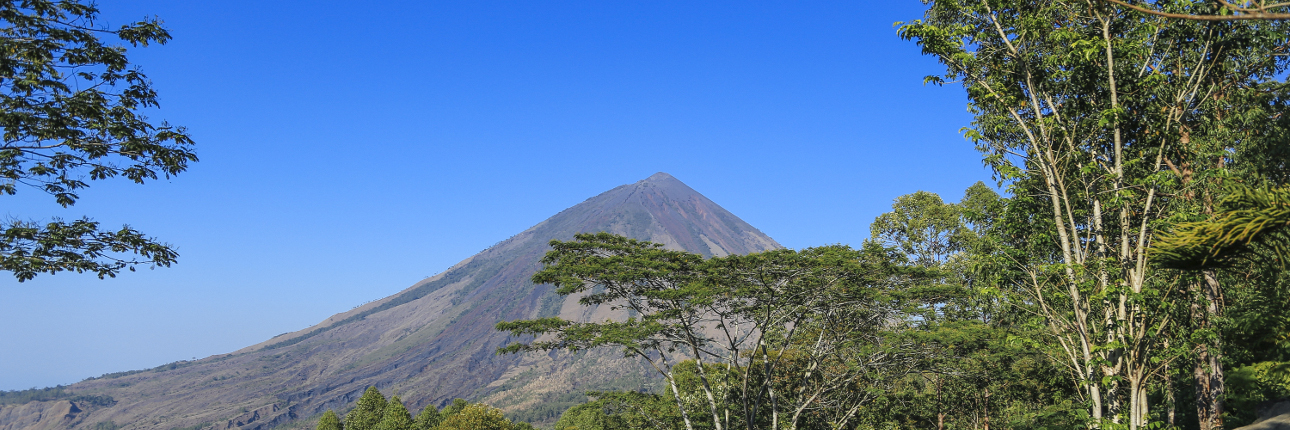
Located in Flores, East Nusa Tenggara, this mountain attracts climbers thanks to its iconic pyramid shape and its status as an active volcano.
While Mount Sadahurip in Garut, West Java, is known for its pyramid-like shape, on Flores Island, East Nusa Tenggara, Mount Inerie is no less captivating. This mountain is located in Ngada Regency, approximately fifteen kilometers south of Bajawa, the regency's capital. With its pointed, symmetrical peak, Mount Inerie presents a majestic silhouette reminiscent of ancient Egyptian pyramids.
The beauty of this still-active volcano can be enjoyed from various vantage points. Aimere and Manulalu Inn are two favorite spots to view Mount Inerie in its entirety. From these vantage points, the pyramidal silhouette of the mountain, which last erupted in 1970, is most clearly visible, especially when the sky is clear and the sun shines on its slopes.
"Even though this mountain rises to 2,245 meters above sea level, the journey time to the summit is relatively short—about three to five hours."
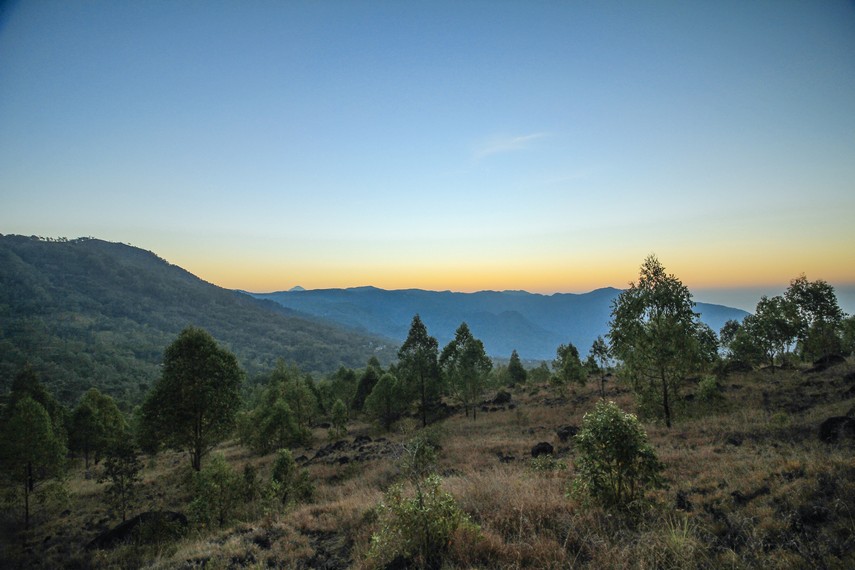
For those seeking a more intimate experience, climbing Mount Inerie can be an unforgettable option. Although the mountain rises 2,245 meters above sea level, the journey to the summit is relatively short—around three to five hours. This is because the hiking trail begins from Watumeze Village, which is already located on a plateau. Climbers usually begin early in the morning to reach the summit in time for sunrise, offering stunning views that are well worth the effort. Mount Inerie is most visited during the dry season, between June and August, when the weather is more favorable and the hiking trail is in optimal condition.
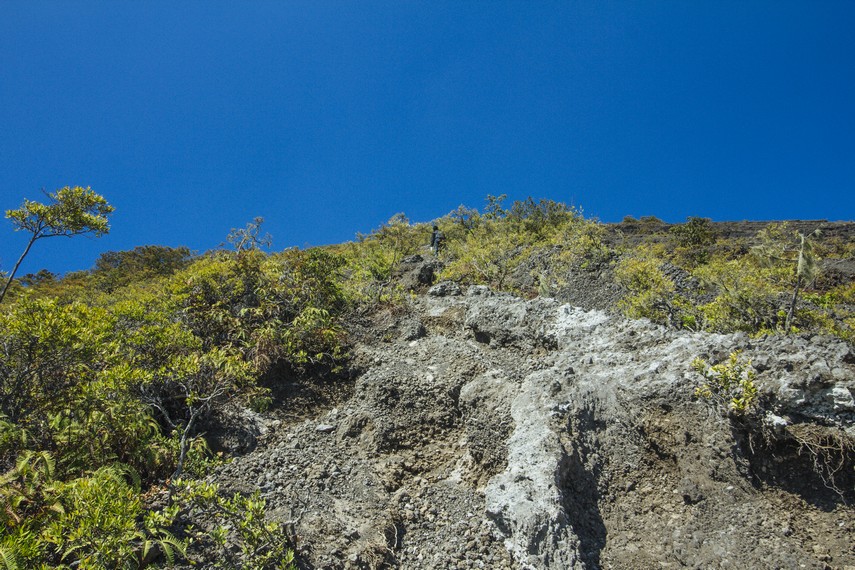
However, climbing Mount Inerie is not easy. The hiking trail is dominated by gravel and rocks all the way to the summit, making the terrain slippery and difficult to walk on. In some sections, climbers may even have to crawl to continue ascending. The lack of vegetation along the trail also poses a challenge, especially if climbing during the day when the sun is directly blazing without shade.
"The climbing route is dominated by gravel and rocky terrain all the way to the summit, making the terrain slippery and difficult to walk on."
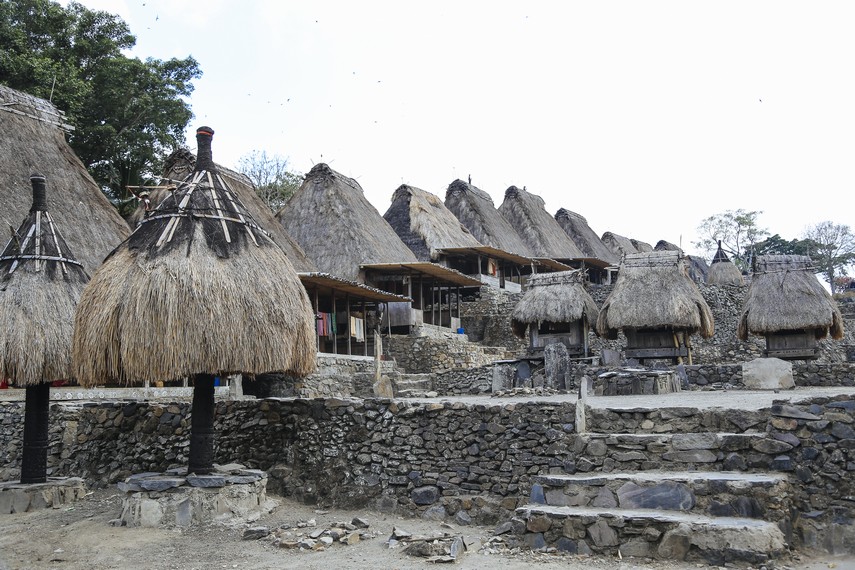
After traversing quite challenging terrain, climbers will reach the first ridge. From this point, the deep crater of Mount Inerie begins to appear. However, the journey is not over. Rocky terrain and increasingly steep slopes remain to reach the highest peak. After about 30 minutes of climbing from the final ridge, climbers will finally reach the summit, marked by three cross-shaped poles embedded in the ground. From this point, the Bena Traditional Village—located right at the foot of the mountain—can be clearly seen and is a unique attraction in Ngada Regency.
Climbing Mount Inerie is well-known among both local and international tourists. For further information or guide services, a tourist information center in Bajawa City is available to assist visitors.
Gorontalo Tuna Satay Seafood Deliciousness Wrapped in Spices
With the tenderness of spiced tuna meat and a distinctive smoky aroma, this satay offers a different taste from other meat satays.
Gorontalo cuisine boasts a rich flavor derived from local spices and ingredients. Perkedel nike, ilabulo, binte biluhuta, and sate balanga are examples of dishes that reflect Gorontalo's culinary traditions. Among these dishes, tuna satay offers a distinct flavor by utilizing Gorontalo's fresh seafood.
Tuna satay is made from pieces of fresh tuna that are skewered and grilled, creating a savory blend of flavors and a distinctive grilled aroma. Its soft texture and mild flavor make this dish a favorite among many, especially due to the freshness of the ingredients sourced directly from Gorontalo's waters.
Marination is Key
Gorontalo tuna satay has a savory, slightly sweet, and smoky flavor from the grilling process. The spices used ensure the tuna remains juicy and doesn't dry out when grilled.
"Gorontalo tuna satay has a savory, slightly sweet taste and a smoky aroma from the grilling process."
The specialty of this satay lies in the marinade used. Tuna pieces are marinated in a mixture of spices such as garlic, shallots, coriander, turmeric, salt, and a little lime juice to remove the fishy smell. After marinating, the satay is grilled until golden brown and has a very appetizing aroma.
This satay is often served with Gorontalo's signature chili sauce, which provides a distinctive spicy sensation. This dish is also often enjoyed with warm white rice or, in some variations, served with rice cakes or ketupat as a side dish.
A Delicious, Nutritious Dish
Over time, tuna satay has undergone several adjustments to enrich its flavor. Some add peanut sauce or soy sauce to create a sweet and savory blend that further delights the palate. Furthermore, some food stalls also offer tuna satay with varying levels of spiciness, tailored to customer preferences.
The popularity of tuna satay makes it easy to find in various food stalls and restaurants in Gorontalo. The unique taste and preparation method make tuna satay a culinary draw for tourists visiting the region. The people of Gorontalo continue to strive to preserve tuna satay, ensuring this dish remains a valuable part of their culinary heritage.
"The unique taste and method of preparation make tuna satay one of the culinary attractions for tourists visiting this area."
Besides its deliciousness, tuna satay also offers equally attractive health benefits. Tuna is rich in protein, omega-3 fatty acids, and vitamin B12, making it a healthy and nutritious choice. The combination of delicious flavor and high nutritional content makes Gorontalo tuna satay a special seafood dish and a must-try.
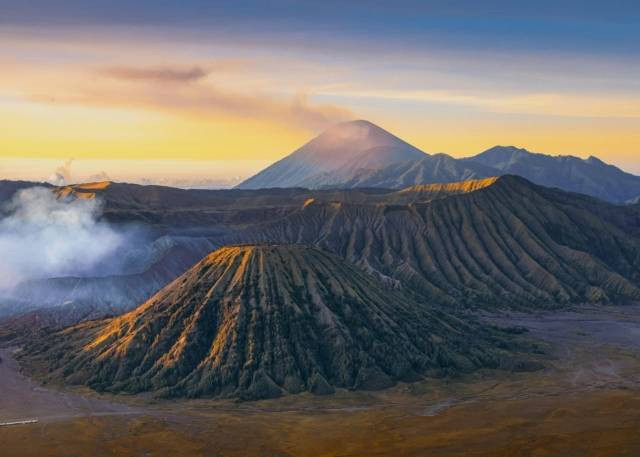
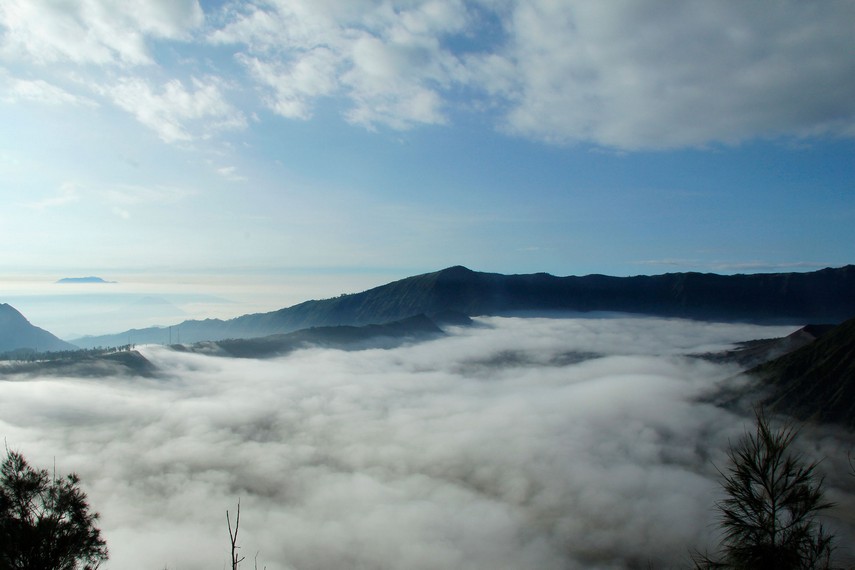
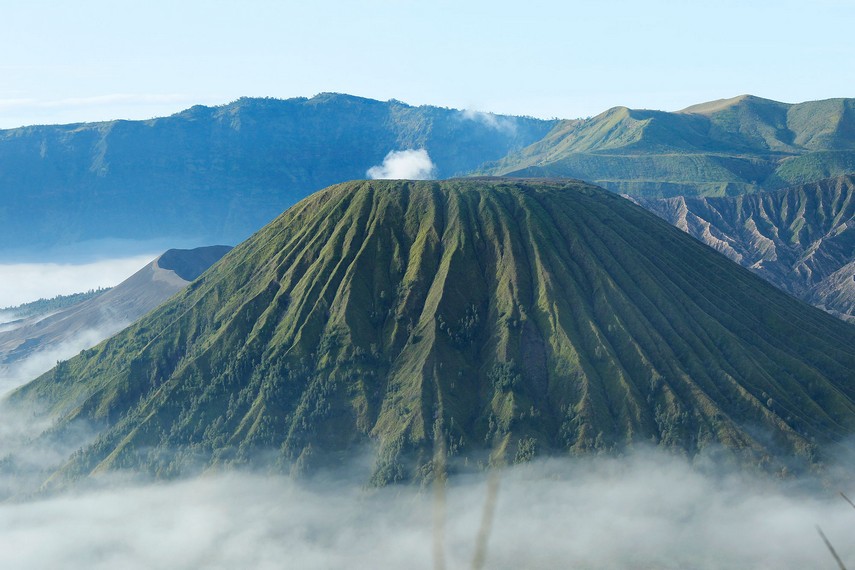
Probolinggo, East Java, Mount Bromo, one of Indonesia's most famous natural tourist destinations, continues to captivate both local and international tourists with its extraordinary beauty. Located in the Bromo Tengger Semeru National Park, Mount Bromo offers breathtaking views, especially at sunrise.
The beauty of Bromo is even more captivating when visitors witness the sunrise from Penanjakan Hill, renowned for its spectacular views. The sky changes color from dark to light, creating an unforgettable serene atmosphere. Tourists, who arrive early in the morning, enjoy the stunning natural beauty with Mount Bromo as a backdrop, emitting volcanic smoke from its crater.
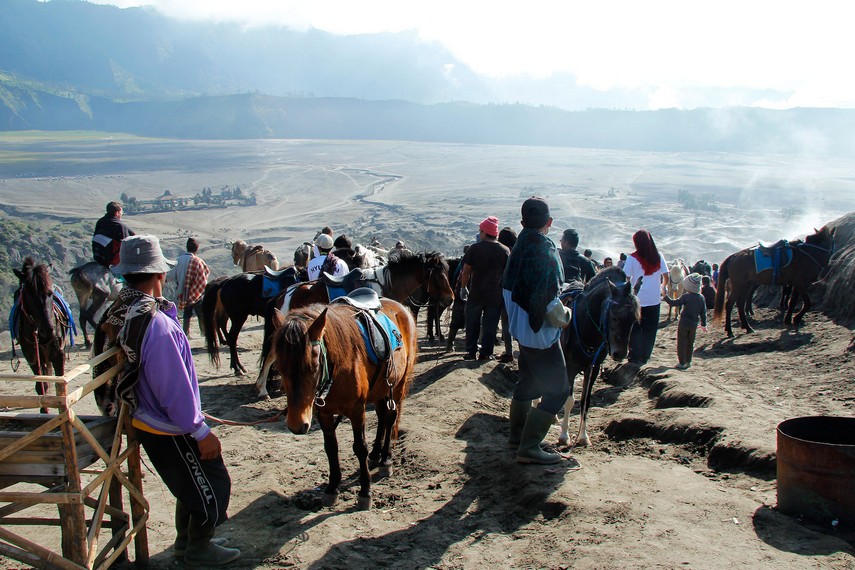
Furthermore, the view of the vast sea of sand and the expanse of savanna hills surrounding Mount Bromo adds to the attraction. Tourists can enjoy a horseback ride through the desert, or walk through the area to experience the exotic natural scenery.
For climbers, Mount Bromo also offers a less challenging climbing experience. The relatively easy hiking trail allows many people, even beginners, to reach the summit and enjoy the views from above.
The beauty of Mount Bromo lies not only in its natural beauty but also in the culture of the Tenggerese people who inhabit the area around the mountain. Every year, the Tenggerese hold the Kasada Ceremony, a ritual offering to Sang Hyang Widhi (the deity they believe in). This ceremony is a major draw for tourists seeking to learn more about local culture and traditions.
The combination of yellow, orange, black and blue colors produced by this natural phenomenon is truly an interesting sight.
Watching the sun rise slowly over the eastern horizon at Mount Bromo is perhaps the most beautiful gift. The combination of yellow, orange, black, and blue created by this natural phenomenon is truly a captivating sight for the beholder.
Mount Bromo tourism offers spectacular natural beauty with mountainous landscapes, seas of sand, and stunning sunrises, making it one of the favorite destinations in Indonesia.
The beauty of Mount Bromo, located within the Mount Semeru region, is renowned internationally. This mountain is considered sacred by the Tengger people, the tribe that inhabits the Mount Bromo area. The name Bromo itself is taken from the name of the main Hindu god, Brahma.
Traveling to Mount Bromo, we are greeted by a sand crater stretching across the entire area of this mountain in East Java. If we travel to Bromo in the morning, we are greeted by the beautiful colors of the sand reflected by the sunlight. The sand here also seems to whisper as it is swept by the gentle breeze that blows as the morning begins.
As we walk, we can see several buildings around the area. One of them is the Poten building. This sturdy structure, standing amidst a sea of sand, serves as a place of worship for the Tengger people. The building's Balinese Hindu architecture is deeply embedded in the building. Each doorway is guarded by a statue of a grinning lion. These statues are intended to ward off evil spirits that might disturb the Mount Bromo area.
Mount Bromo is not only a tourist destination, but also a venue for Hindu religious rituals. One of the rituals held by the Tenggerese people here every year is the Yadnya Kasada ritual. In this ritual, the Tenggerese people offer offerings of livestock and food to the gods who inhabit the mountains in the area, such as Mount Semeru, Batok, Bromo, and Pananjakan.
Being in the Mount Bromo area and witnessing its natural beauty is truly an unforgettable experience. The exotic sand dunes, the breathtaking sunrise, and interacting with the Tenggerese people certainly make exploring the Mount Bromo area a truly enjoyable experience.
With all its natural and cultural charm, Mount Bromo remains a must-see destination for anyone seeking to experience Indonesia's natural wonders. Not only for nature lovers, but also for those seeking the serenity and peace of Mount Bromo.
Indonesia is a very fortunate nation. Besides its abundant natural resources, it also boasts a rich history. From the glory days of ancient kingdoms to modern historical events such as the people's struggle to gain independence from colonial rule, everything is well-documented in various historical tourist attractions throughout Indonesia.
For your next vacation plans, it would be truly exciting to visit the places featured in your school history textbooks. Besides their unique charms, Indonesia's historical attractions are also incredibly fascinating.
Intrigued? Check out these popular historical tourist destinations in Indonesia:
Historical Tourist Attractions in Indonesia
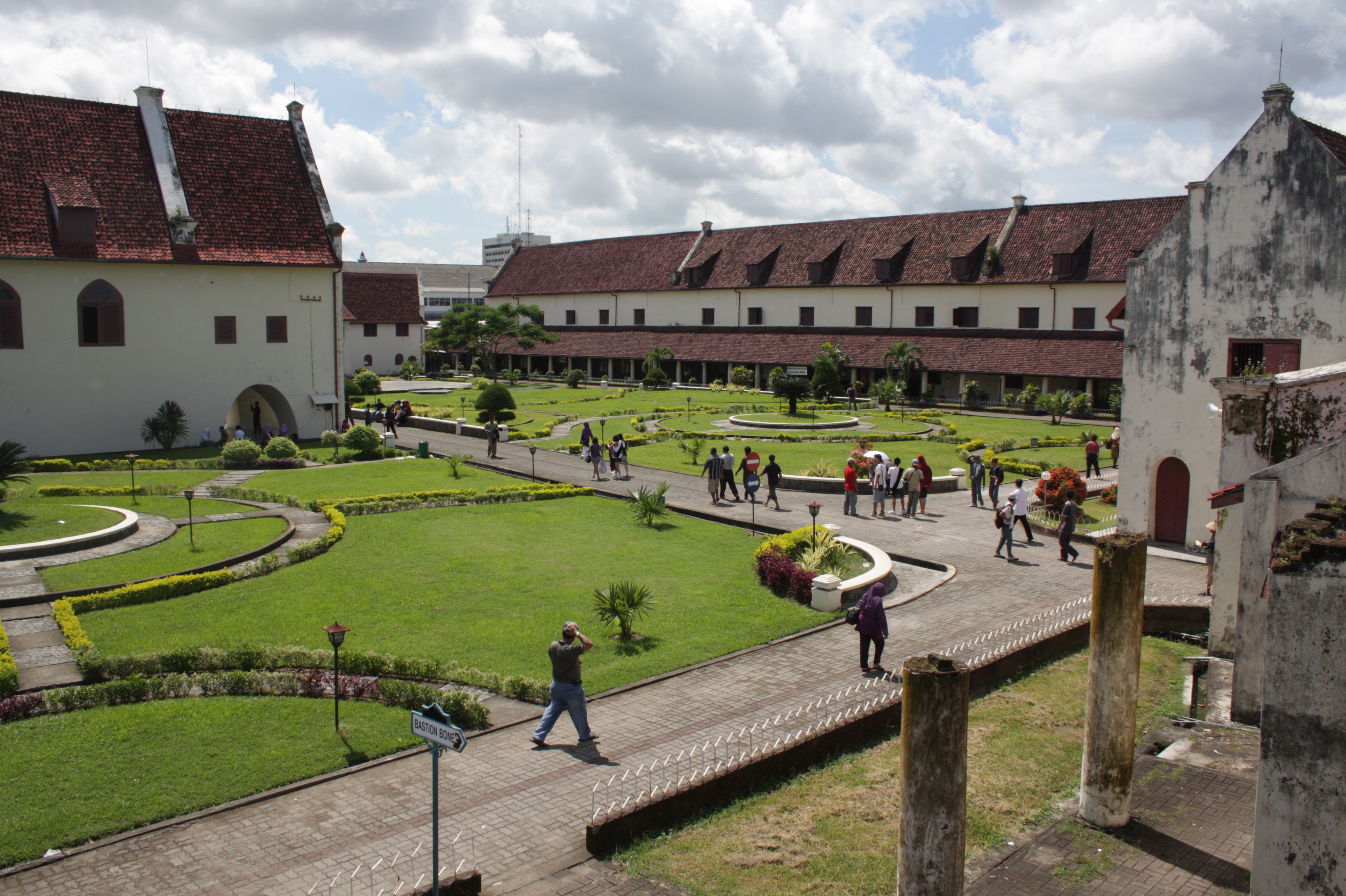
1. Fort Rotterdam
Fort Rotterdam | Image source: Wikipedia
Location: Ujung Pandang Street, Bulo Gading, Ujung Pandang District, Makassar City, South Sulawesi 90171
Fort Rotterdam, a historic tourist attraction, was built during the Gowa-Tallo kingdom, specifically during the reign of the 9th Gowa Kingdom in 1667. This historical attraction in Indonesia is located on the west coast of Makassar and was formerly known as Ujung Pandang Fort. This historic building bears witness to the Dutch colonial government's successful conquest of Indonesia and subsequent loss of power.
When the Gowa Kingdom conceded defeat to the colonialists, the fort was handed over to the Dutch East India Company (VOC). Under VOC control, the fort was renamed Fort Rotterdam. Afterward, the fort served as a defense center and a spice warehouse for eastern Indonesia. When the Dutch colonial government faltered, the fort was recaptured by troops led by Sultan Hasanuddin.
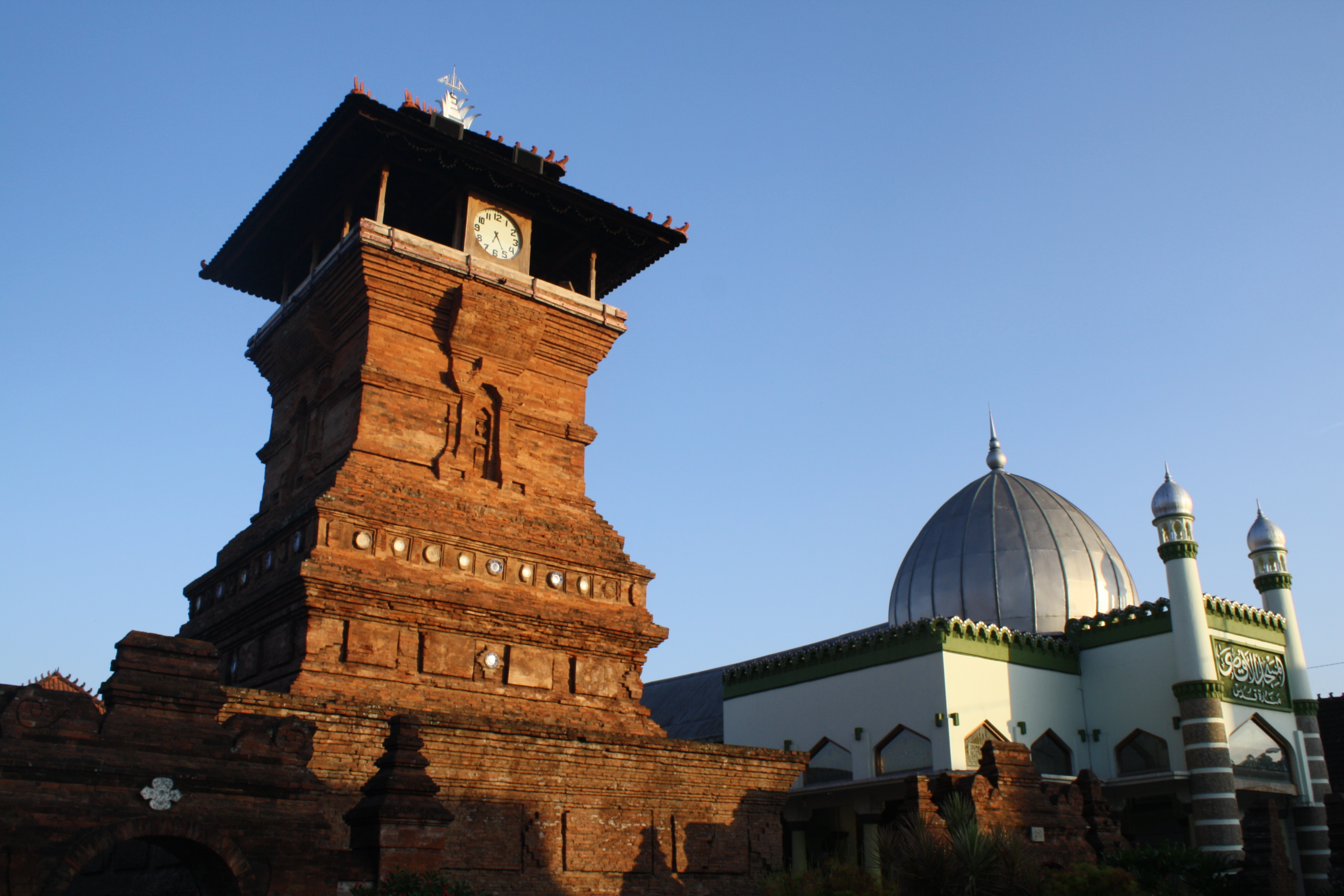
2. Kudus Tower Mosque
Kudus Tower Mosque | Image source: Wikipedia
Location: Jl. Menara, Pejaten, Kauman, Kudus City District, Kudus Regency, Central Java 59315
The Menara Kudus Mosque was built around 1549. Its unique appearance alone reveals that this place of worship for the Muslim community is a blend of Hindu-Buddhist and Islamic cultures. This is understandable, as Hinduism and Buddhism were still strong at the time. Thanks to Sunan Kudus' active role in spreading Islam on the island of Java, this mosque was able to stand.
This historical tourist attraction in Indonesia is characterized by its 18-meter-tall minaret and is listed as one of the oldest mosques in Indonesia. While visiting this historical tourist destination in Indonesia, you can also visit Sunan Kudus' tomb, located on the west side of the mosque. You can also take part in the Dhandhangan Festival held by local residents to welcome the arrival of Ramadan while visiting this historical attraction.
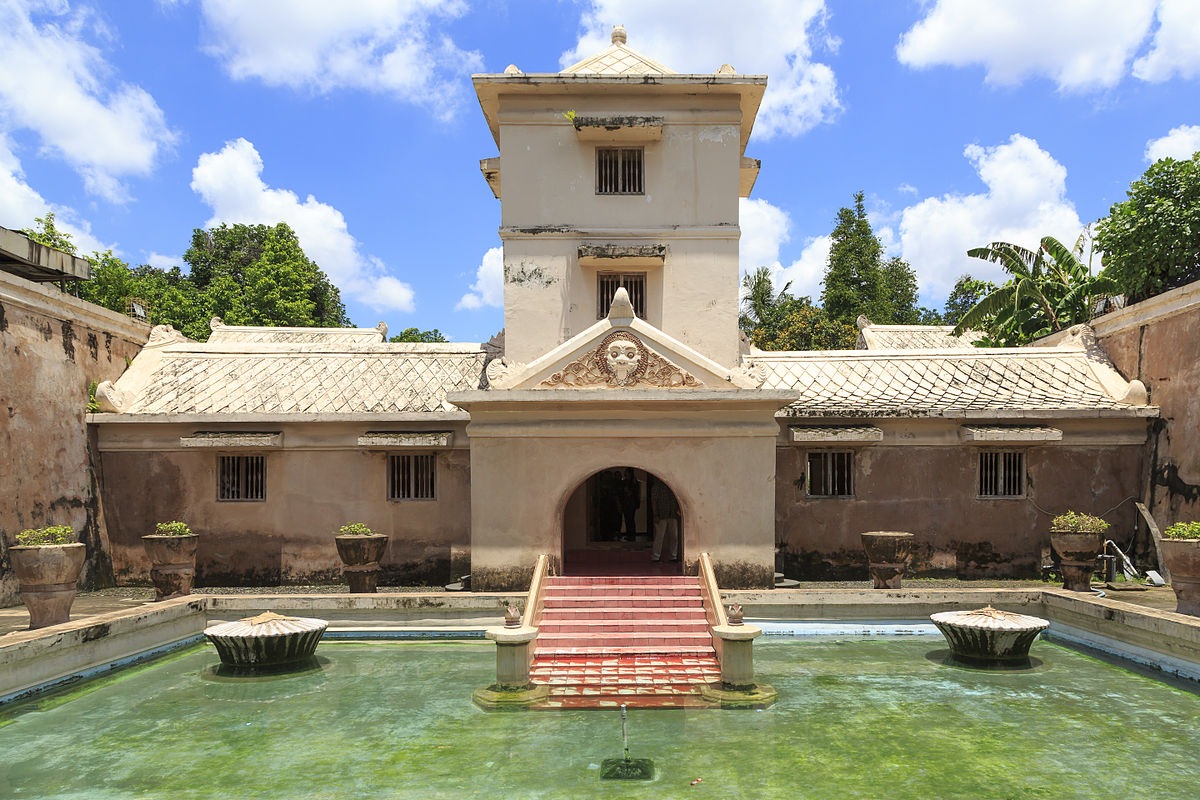
3. Essence Park
Essence Park | Image source: Wikipedia
Location: Taman Sari Tourism, Jalan Tamanan, Patehan, Kraton District, Yogyakarta City, Special Region of Yogyakarta 55133
One of Indonesia's historic and iconic tourist destinations is Taman Sari. The building, which took nine years to build, was first conceived during the reign of Sultan Hamengku Buwono I as a palace garden for the Ngayogyakarta Hadiningrat Palace.
Spanning 10 hectares, the Taman Sari complex consists of bathing pools, suspension bridges, and water canals. A Portuguese architect nicknamed Demang Tegis was responsible for Taman Sari's construction. This historical tourist attraction in Indonesia has survived various historical events, from Dutch and Japanese colonial rule to Indonesian independence, and survived the British invasion of 1812 and the earthquake of 1876.
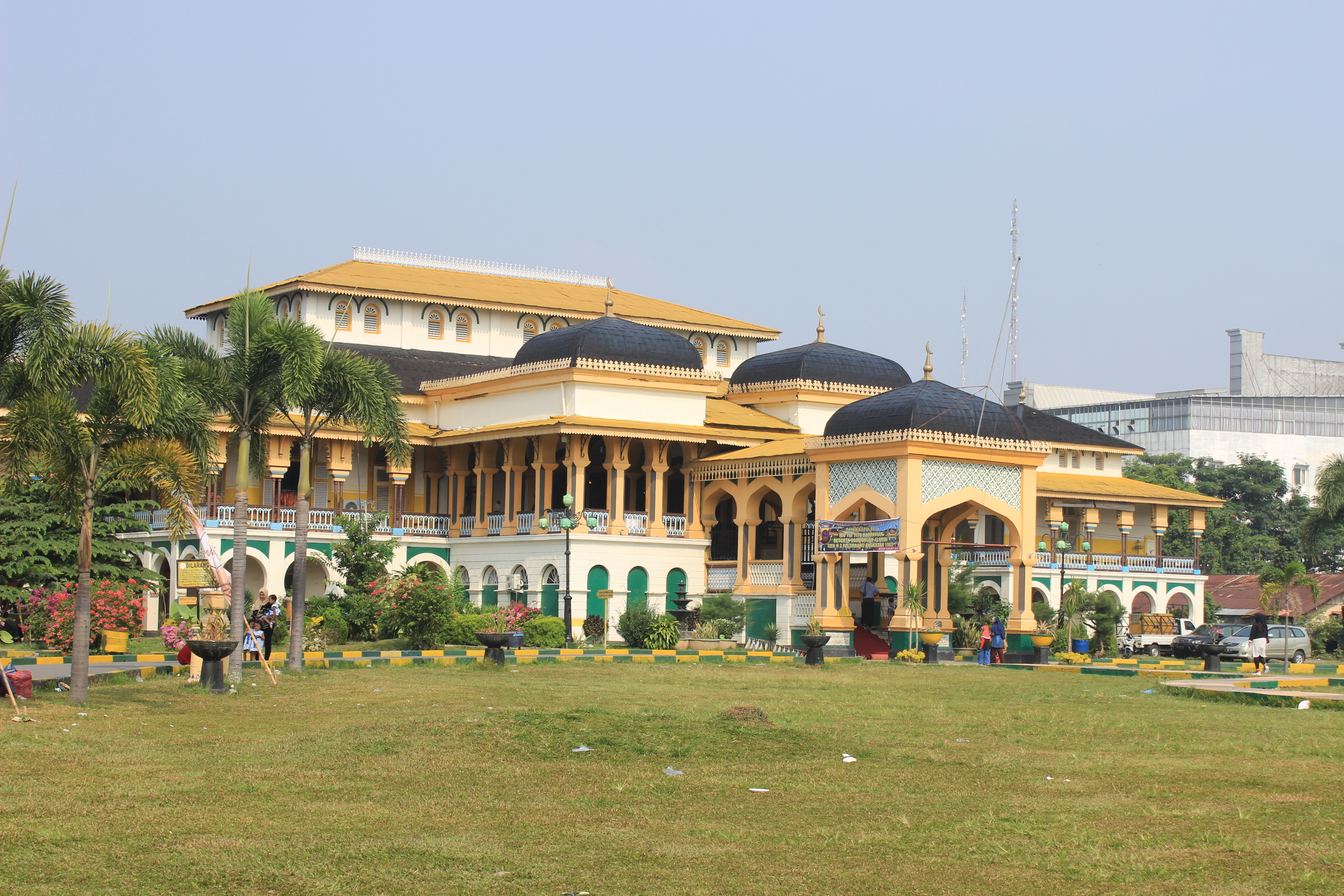
4. Maimun Palace
Maimun Palace | Image source: Wikipedia
Location: Jalan Sultan Ma'moen Al Rasyid No. 66, A U R, Medan Maimun District, Medan City, North Sumatra 20151
Located in Medan, the magnificent Maimun Palace is a relic of the Deli Sultanate. Construction of this historical tourist attraction in Indonesia began on August 26, 1888, and was completed on May 18, 1891, and it still stands majestically and sturdily.
This historic building, characterized by its bright golden yellow color, is the work of Italian architect Theo Van Erp. With his brilliant mind, he successfully combined traditional Malay, Middle Eastern, and European architectural concepts when constructing this palace. This unique architectural concept, complemented by equally luxurious furnishings, makes Maimun Palace one of Indonesia's must-visit historical tourist icons.
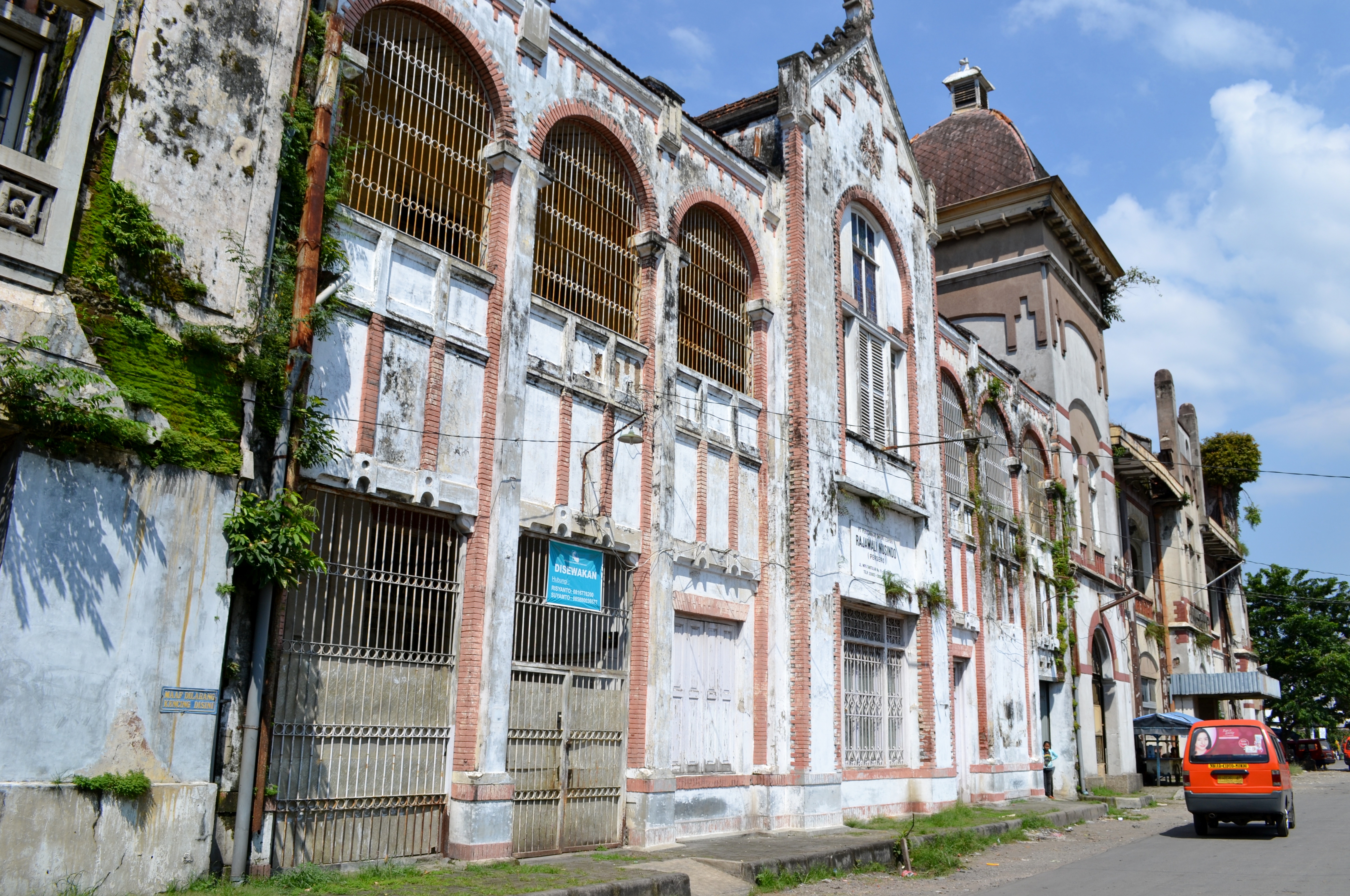
5. Old Town of Semarang
Old Town of Semarang | Image source: Wikipedia
Location: Tanjung Emas, North Semarang sub-district, Semarang City, Central Java
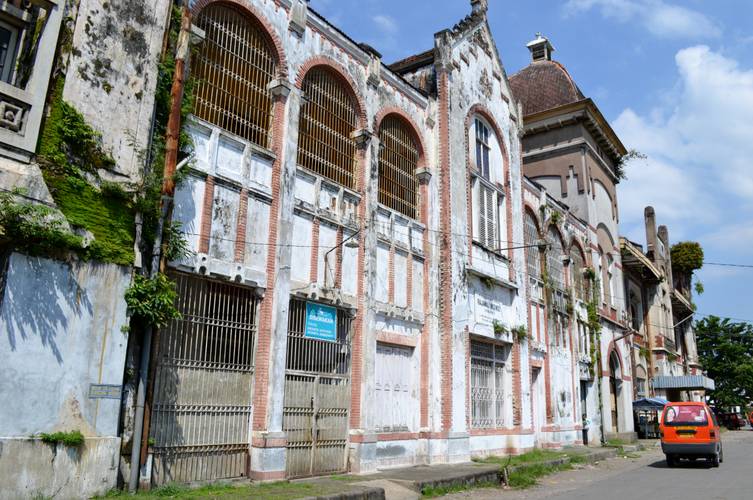
Semarang's Old Town area is a historic landscape. Once a bustling trading center in the 19th and 20th centuries, Semarang's Old Town boasts around 50 ancient buildings that still stand strong and hold significant historical value. Travelers visiting this Indonesian historical attraction will be treated to buildings featuring European architecture from the 1700s, complete with unique roofs, colorful glass, and large doors and windows.
This area is so ancient and historic that it is planned to be nominated as a UNESCO World Heritage Site. Semarang's Old Town attracts not only domestic tourists but also many international tourists. If you're looking to broaden your historical knowledge, this historical tourist destination in Indonesia could be an interesting choice.
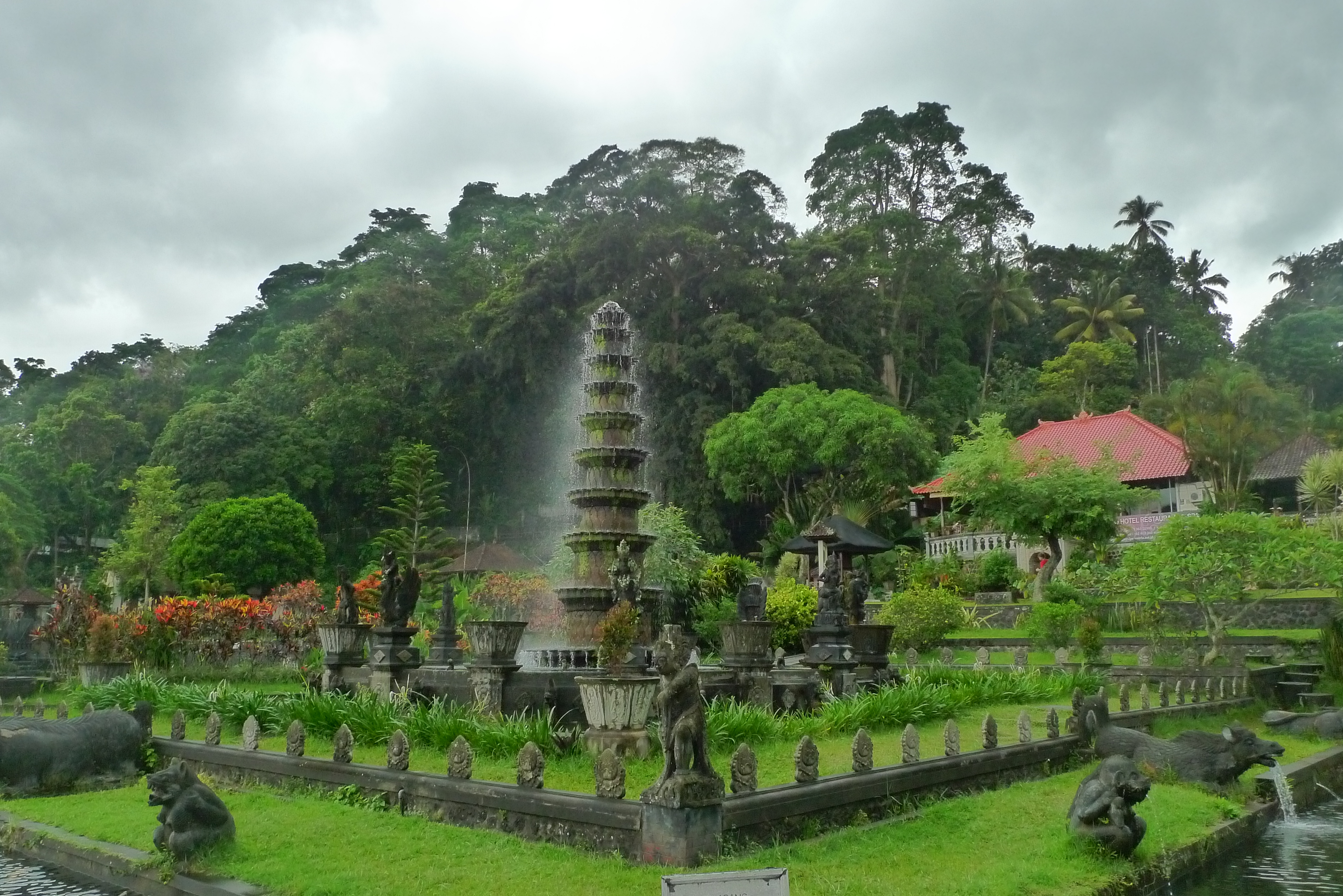
6. Tirta Gangga
Tirta Gangga | Image source: Wikipedia
Location: Abang Raya Road, Traditional Village, Ababi, Abang, Karangasem Regency, Bali 80852
Tirta Gangga is a historic building, the former royal palace of Karangasem, located in the eastern part of Bali. Situated near Mount Agung, this garden is renowned for its beautiful water palace. This one-hectare garden and building complex was built in 1946 by the King of Karangasem.
In 1963, the garden was nearly destroyed by the eruption of Mount Agung. Following the disaster, the garden was restored and rebuilt, and you can still visit it on the Island of the Gods. Besides its historical appeal, this historical tourist attraction in Indonesia is also known for its location in an area rich in beautiful rice terraces.
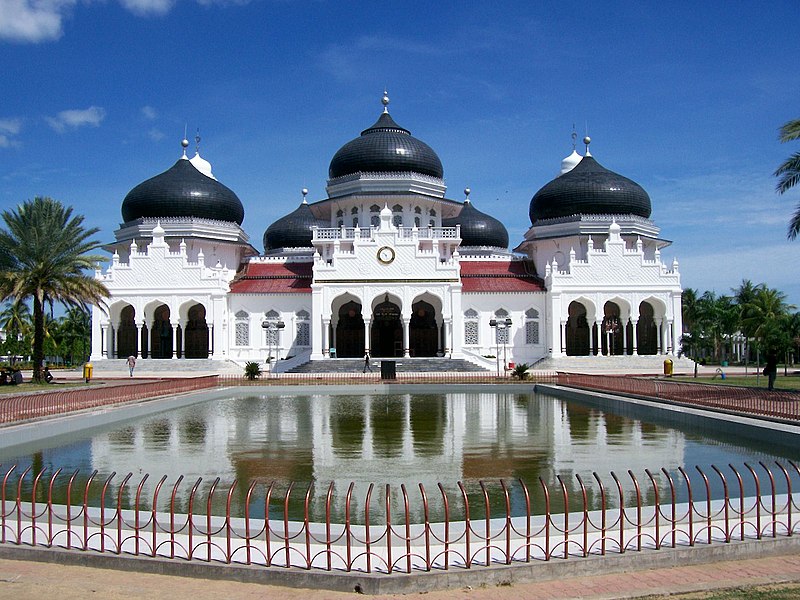
7. Baiturrahman Mosque
Baiturrahman Mosque | Image source: Wikipedia
Location: Jl. Moh. Jam No. 1, Kp. Baru, Baiturrahman District, Banda Aceh City, Aceh
Located in Banda Aceh, the Baitturahman Mosque is one of Aceh's historic and iconic mosques. Besides its stunning architecture, this historical tourist attraction has also witnessed various historical events.
Initiated during the Aceh Sultanate by Sultan Iskandar Muda, this historical tourist destination served as the headquarters and main defense fortress of the Acehnese people during the war of independence. The mosque's magnificent and sturdy structure also survived the tsunami that struck Aceh in 2004.
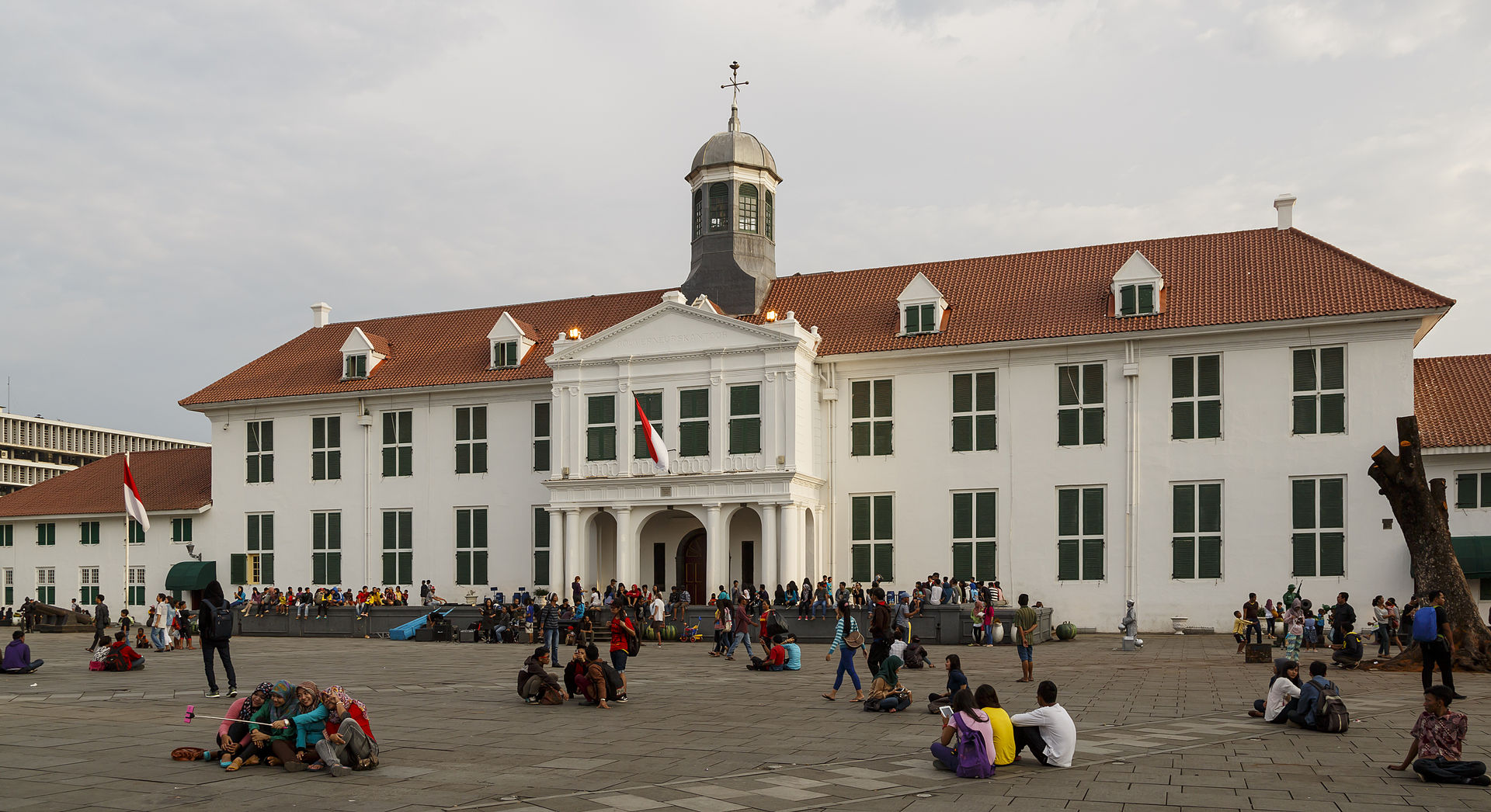
8. Old Town Jakarta
Old Town Jakarta | Image source: Wikipedia
Location: Pinangsia, Taman Sari District, West Jakarta City, Special Capital Region of Jakarta 11110
Jakarta also has an equally fascinating historical tourist destination, the Old Town area. As the center of government during the Dutch colonial period, you'll immediately experience a different atmosphere when visiting this historical attraction in Indonesia.
Also, bring your camera if you visit Jakarta's Old Town, as there are countless historic buildings with distinctive architecture that still stand strong today. Most of the historic buildings in this historical attraction in Indonesia are now used as museums, cafes, restaurants, and more.
Historic museums you can find in this tourist attraction include the Fatahillah Museum, the Wayang Museum, the Bank Indonesia Museum, the Fine Arts and Ceramics Museum, and the Maritime Museum.
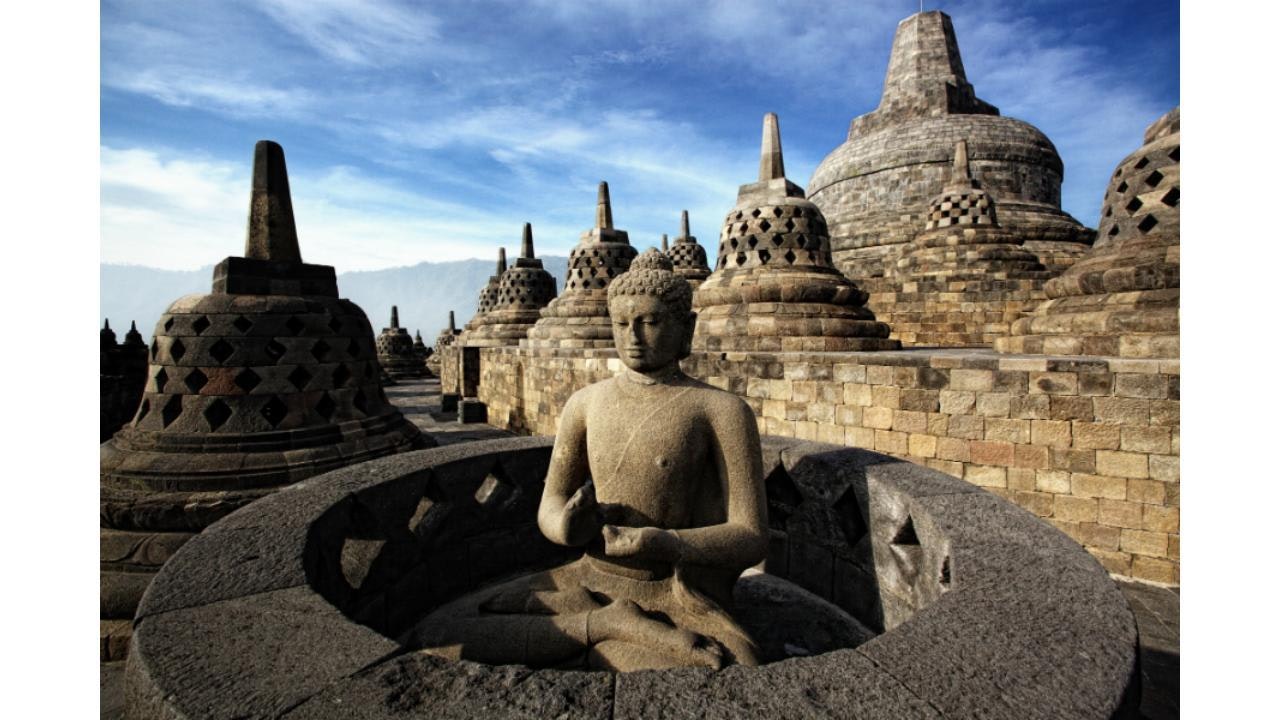
9. Borobudur Temple
Borobudur Temple | Image source: Wikipedia
Location: Jl. Badrawati, Borobudur, Magelang, Central Java
Who doesn't know Borobudur Temple? Built during the reign of King Samaratungga of the Syailendra Dynasty in 825 AD, this world-renowned Indonesian historical landmark stands 42 meters tall and consists of 10 levels.
Borobodur's architect, Gunadharma, created 2,672 relief panels that adorn the entire surface of this largest Buddhist temple. For those looking for a historical site as your next tourist destination, Borobudur Temple is the perfect choice. Tour guides are available on site to share their knowledge of the temple.
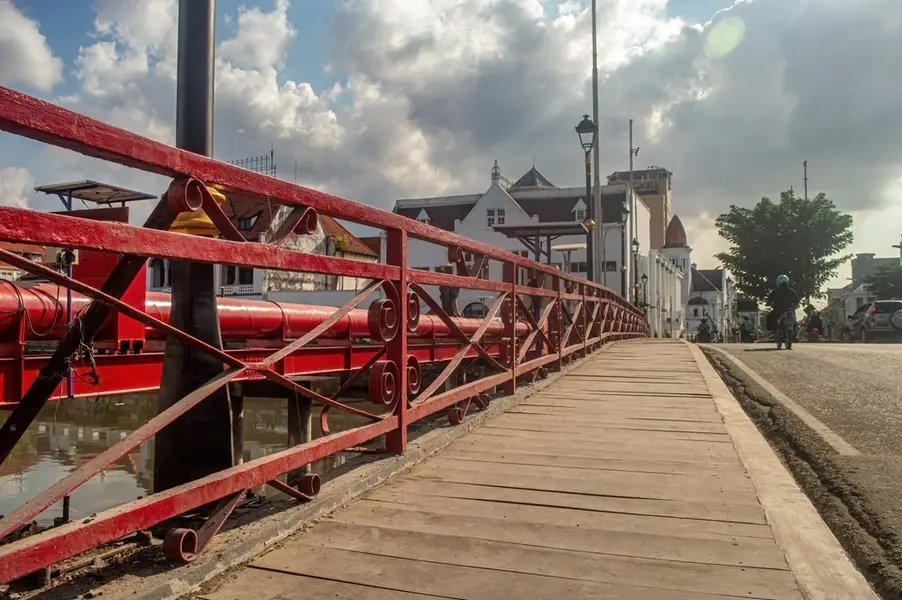
10. Red Bridge Surabaya
Red Bridge Surabaya | Image source: Wikipedia
Location: Red Bridge Street, Krembangan Sel., Pabean Cantikan District, Surabaya, East Java
The Red Bridge is an ideal destination for tourists interested in the history of Indonesia's struggle for independence. This location bears silent witness to the struggle of the people of Surabaya against colonialism. The bridge's bright red color, aptly named, symbolizes the courage of the Surabayans.
Its uniqueness lies in its deep historical significance. This bridge was the site of fierce battles between Indonesian freedom fighters and Allied forces, most notably the death of Brigadier General Mallaby on October 30, 1945.
The Red Bridge's current appeal lies in the old colonial buildings that create the historical atmosphere of the surrounding area. Furthermore, the 10 November Museum is also located nearby.
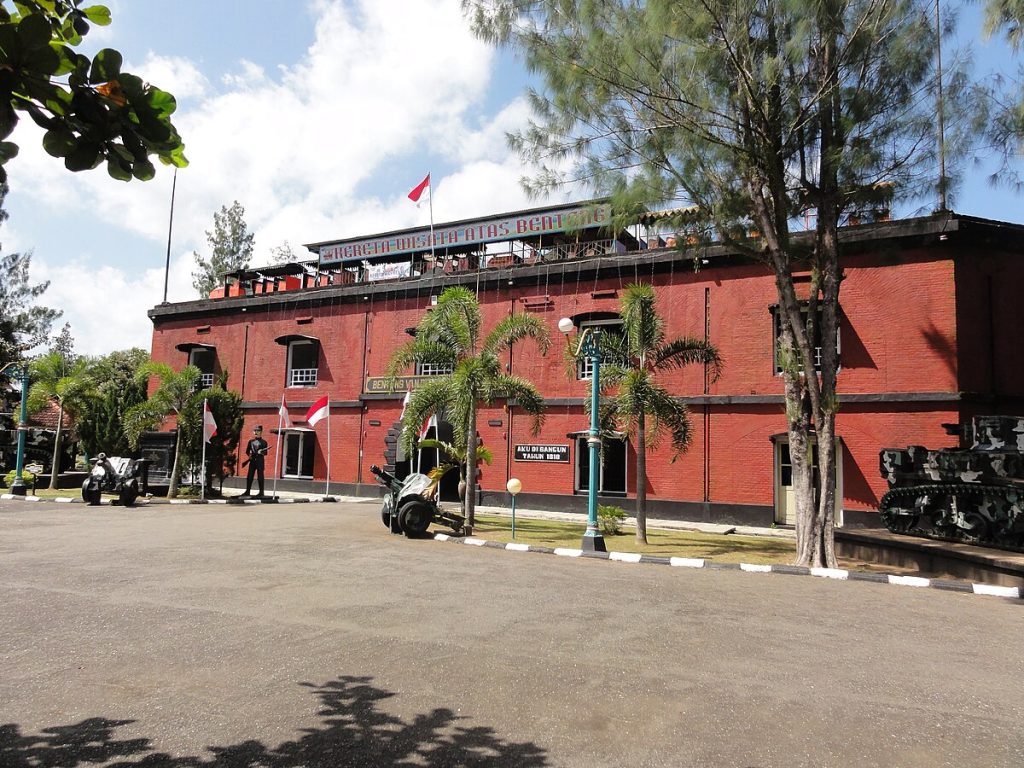
11. Van der Wijck Fort
Van der Wijck Fort
Location: Central Sidayu, Sidayu, Gombong District, Kebumen Regency, Central Java
Have you ever visited Fort Van der Wijck? Built in the 19th century, this Dutch colonial-style fort is located in Gombong, Kebumen, Central Java. Its symmetrical octagonal shape and bright red walls are truly unique, unlike most other forts in Indonesia.
During the Japanese occupation and the Indonesian revolution, the fort continued to serve as a military headquarters. To this day, Fort Van der Wijck serves as a historical and educational tourist attraction. Tourists can explore the fort's interior, ride a miniature train on the roof, and enjoy the views from the top.
The combination of military history, colonial architecture, and a classic atmosphere, along with its sturdy structure, make this a captivating destination for visitors of all ages.
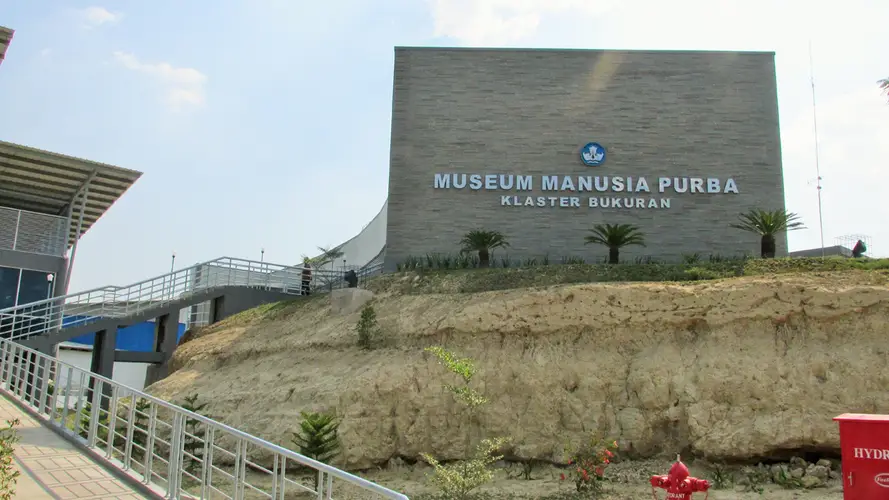
12. Sangiran Ancient Human Site
Sangiran Ancient Human Site
Location: Jl. Sangiran No.Km.4, Kebayanan II, Krikilan, Kec. Kalijambe, Sragen Regency, Central Java
The uniqueness of the Sangiran Early Man Site lies in the richness of ancient human fossils found in the area, including Homo erectus, which is estimated to have lived around 1.5 million years ago.
This world-renowned archaeological site, located in the Bengawan Solo River valley in Central Java, is considered a prime example of human evolution and a prehistoric environment that is crucial for paleoanthropology. Sangiran was recognized as a World Heritage Site by UNESCO in 1996, with its main attraction being the Sangiran Early Man Museum.
The museum showcases a collection of fossils, various dioramas of prehistoric life, and fascinating scientific explanations. For those interested in historical education, especially students and researchers seeking to understand human origins and the evolution of the Earth, this site is an excellent choice.
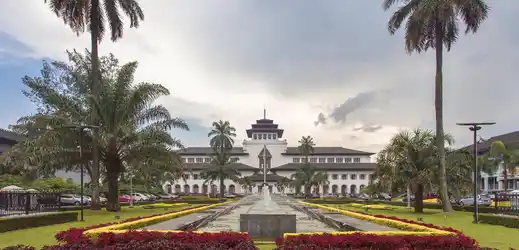
13. Sate Building Bandung
Sate Building Bandung
Location: Jl. Diponegoro No. 22, Citarum, Bandung Wetan District, Bandung City, West Java
The Gedung Sate, designed by architect J. Gerber, is a unique architectural icon of Bandung, with its skewer ornament at its peak. Originally used as the headquarters of the Dutch Department of Public Works in 1920, the building now serves as the office of the Governor of West Java.
Blending Indo-European and traditional Nusantara architectural styles, it reflects Indonesia's rich culture and history. The attraction of the Gedung Sate lies not only in the building itself, but also in the digital museum within, the captivating classic colonial atmosphere, and the surrounding gardens.
Why is this building named "Gedung Sate"? Apparently, the ornament on the roof resembles a skewer with six dots, symbolizing the six million Guilders allocated for its construction at the time.
So, those are our recommendations for Indonesia's best historical tourist destinations. Have you decided which historical sites in Indonesia you'll visit on your next trip..? Before planning a solo trip, it's a good idea to arrange all your vacation needs well in advance.
Ambarawa Railway Museum Tourism Object - The Ambarawa Railway Museum is a train station that has been converted into a museum in Ambarawa, Central Java. In this museum, we will find some of the equipment of the train that once triumphed in ancient times. One of the steam trains with locomotive numbers B 2502 and B 2503 was made by Maschinenfabrik Esslingen, and B 5112 was made by Hannoversche Maschinenbau AG which is still operating as a tourist train in Ambarawa. This jagged steam train is very unique and is one of only three remaining in the world. Two of them are in Switzerland and India. Apart from these unique collections, you can also see various types of steam locomotives from the B, C, and D series to the largest CC types (CC 5029, Schweizerische Lokomotiv und Maschinenfabrik/Swiss Locomotive and Machine Works) in the museum courtyard.
The building and location of the Ambarawa Railway Museum
Ambarawa was originally a military town during the Dutch Colonial Government. King Willem ordered to build of a new train station that would allow the government to transport its soldiers to Semarang. On May 21, 1873, the Ambarawa railway station was built on a land area of 127,500 m². It was originally known as Willem I Station.
This station was originally a meeting point between the 1,435 mm wide gauge towards Kedungjati and 1,067 mm towards Yogyakarta via Magelang. It can still be seen that both sides of the railway station were built to accommodate the different widths of the gauge.
The Ambarawa Railway Museum was then established on October 6, 1976, at Ambarawa Station to preserve the steam locomotive which was then in a period of reuse when the 1,435 mm rail line belonging to the State Railway Company was closed. This is an open-air museum located in the station complex.
Ambarawa Railway Museum Tour
This museum serves the Ambarawa-Bedono round trip train, Ambarawa-Tuntang round trip, and the Ambarawa-Tuntang round trip tour train. The Ambarawa-Bedono pp tourist train or better known as the Ambarawa Railway Mountain Tour operates from this museum to Bedono Station which is 35 km away and takes 1 hour to reach the station. This train passes through a jagged rail that only exists here and in Sawahlunto. A panorama of natural beauty such as a green valley between Mount Ungaran and Mount Merbabu can be seen along the way.
The view that can be enjoyed from the Ambarawa-Tuntang train and lorry is no less beautiful. This train departs from the station to Tuntang Station which is about 7 km from the museum. Along the way, you can see a charming landscape of rice fields and fields with the background of Mount Ungaran, Mount Merbabu, and Rawa Pening in the distance. This train has actually been around for a long time but was closed in the 1980s due to damaged infrastructure.
The ticket price for the tourist train is IDR. 0,000 per person, while the IDR lorry. 10,000 per person. IDR car rental price. 3,000,000
Thus a brief review of the Ambarawa Railway Museum, I hope this brief review can be a reference for you to get to know more about the History of the Ambarawa Railway Museum Tourism Object. Hopefully Helpful and Thank you for visiting.
The history of Batik in Indonesia originally came from the ancestral heritage of the Javanese people and was closely related to the development of the Majapahit Empire and the spread of Islamic teachings in Java at that time. In some notes, the development of batik was mostly carried out during the Mataram Sultanate era, then continued during the Surakarta Sunanate and Yogyakarta Sultanate eras.
Batik art in Indonesia has been known since the time of the Majapahit Kingdom and continued to grow until the next kingdom and its kings. The art of batik in general was widespread in Indonesia and specifically on the island of Java after the late 18th or early 19th century.
Batik art is the art of drawing on cloth for clothing which became one of the cultures of the royal family in ancient Indonesia. Initially, batik activities were limited to the palace, and batik was produced for clothing for kings and government families, and dignitaries. Because many of the dignitaries lived outside the palace, they brought this batik art from the palace and produced it in their respective places.
Gradually the art of batik was imitated by the common people and then expanded so that it became the work of household women to fill their free time.
The coloring materials used when making batik consist of native Indonesian plants which are made by themselves, including noni tree, Tinggi, soga, and indigo. The soda material is made from ash soda, while the salt is made from mud soil.
BATIK DEVELOPMENT
In its development, the history of batik itself has attracted the attention of officials of the Majapahit Kingdom. At that time also the manufacture of batik has developed. Materials that were originally made of leather and so on have now changed to the white cloth or light-colored cloth. Because it is felt from the white cloth itself the motifs obtained are more durable and can be used for wider utilization.
The motives are not only about animals and plants. But now motifs such as abstract motifs, temple motifs, cloud motifs, wayang beber motifs, and so on, have been used at that time, namely when the Majapahit Kingdom was founded.
The batik motif itself is still not varied. The patterns and motifs are still dominant in the form of plants and animals. The batik craftsmen are also still not too many. At that time making batik was only used as a pleasure for the craftsmen themselves.
From the beginning of the history of batik, it eventually spread throughout other kingdoms. Because of the popularity of batik, finally, officials from the Kingdom of Mataram, the Kingdom of Majapahit, the Kingdom of Demak, and the kingdoms that followed made batik a cultural symbol.
But when Islam came and influenced many people, the animal-shaped batik motifs were removed. Because batik cloth in the shape of animals is considered to violate Islamic law. So that the motive has been removed and eliminated. Unless the creation is disguised using other paintings.
Indonesian Batik has become increasingly famous after receiving recognition from UNESCO which decided to Indonesian Batik as a world heritage and one of the humanitarian heritages for oral and non-material culture. This recognition was carried out officially at the UNESCO meeting in Abu Dhabi on October 2, 2009, becoming an important milestone for the existence of Batik in the international world. In a very long span of time, batik was present in the archipelago. Batik has been around since the days of Indonesia's ancestors.
The word batik comes from a combination of two Javanese words: amba, which means 'to write', and point, which means 'point'. Although the word batik comes from the Javanese language, the presence of batik in Java itself is not recorded. G.P. Rouffaer argues that the technique of batik may have been introduced in India or Sri Lanka in the 6th or 7th century. On the other hand, J.L.A. Brandes, a Dutch archaeologist, and F.A. Sutjipto, an Indonesian historian, believe that the batik tradition is native to areas such as Toraja, Flores, Halmahera, and Papua. It should be noted that the region is not an area influenced by Hinduism, but is known to have an ancient tradition of making batik.
If seen from the beginning of the history of batik, began in the 17th century AD. At that time batik was still written and painted only on lower leaves and traditional house boards.
G.P. Rouffaer also reported that the grinning pattern had been known since the 12th century in Kediri, East Java. He concluded that a pattern like this could only be formed by using the canting tool, so he argued that the canting was found in Java around that time. The details of the cloth carvings resembling batik patterns are worn by Prajnaparamita, a statue of the Buddhist goddess of wisdom from East Java in the 13th century. The details of the garments feature an intricate pattern of vines of plants and flowers similar to the traditional Javanese batik patterns that can be found today. This shows that making intricate batik patterns that can only be made with a canting was known in Java as early as the 13th century or even earlier.
Meanwhile, in the legend in Malay literature of the 17th century, Sulalatus Salatin, tells of Admiral Hang Nadim who was ordered by Sultan Mahmud to sail to India in order to get 140 pieces of litter cloth with patterns of 40 types of flowers on each sheet. Unable to fulfill the order, she made the cloth herself. But unfortunately, his ship sank on the way home and he was only able to bring four sheets, which disappointed the Sultan. Then the four pieces of cloth are interpreted as batik.
In European literature, the batik technique was first described in the book History of Java, London, 1817 written by Sir Thomas Stamford Raffles. He had been the British Governor in Java when Napoleon occupied the Netherlands. In 1873 a Dutch merchant, Van Rijekevorsel, gave a piece of the batik he had obtained during a visit to Indonesia to the Ethnic Museum in Rotterdam in the early 19th century. It was then that batik began to reach its golden age. When exhibited at the Exposition Universelle in Paris in 1900, Indonesian batik amazed the public and artists.
Then since industrialization and globalization, which introduced automation techniques, new types of batik emerged, known as stamped batik and printed batik. Traditional batik, which is produced by handwriting techniques using canting and wax, it is called written batik. Hugh Clifford recorded this batik industry to produce rainbow fabrics and teleport fabrics.
In the end, batik is a craft that has high artistic value and has become part of Indonesian culture, especially in Java. Since ancient times, women have made their skills in batik a livelihood. So in the past batik work was exclusively women's work. Until the invention of the "Batik Cap" which allowed men to enter this field. Then there is the phenomenon of coastal batik which has masculine lines that can be seen in the “Mega Mendung” style. For people in this coastal area, batik work is a custom for men.
Speaking of batik traditions, at first batik was a hereditary tradition from the Javanese people. Maybe, sometimes a motif can be identified as coming from a certain family of batik. Some batik may indicate the status of a person. Even today, some traditional batik motifs are only used by the Yogyakarta and Surakarta Palace families. The Cirebon batik is patterned with sea creatures and Chinese influence.
In Indonesian history, batik later became the clothing worn by figures, from the pre-independence period to the present. In the early 1980s, during his foreign diplomacy, President Soeharto said that batik was inherited from Indonesian ancestors, especially the Javanese, which is still worn by various groups and ages.
With the recognition of UNESCO and the establishment of National Batik Day every October 2, Batik is increasingly positioned not only as Indonesian culture but also as the identity and identity of the Indonesian nation.
Technically, Indonesian batik is considered full of symbols and culture that is closely related to the life of the people themselves. That way the original batik from Indonesia cannot be claimed by other countries. Because previously batik had been claimed as the ancestral heritage of other countries.
Indonesian Batik is widely known throughout the world. Not only famous by the Javanese, batik itself has spread to all the islands in Indonesia.
Batik-patterned clothes are no longer only worn by the Javanese. Now batik cloth itself is considered formal clothing suitable for use in any event. In fact, it's not just people who are aristocrats, young people throughout Indonesia also often wear batik-patterned clothes.
The towering Kujang Monument is located in a strategic place and is a proud monument to the city of Bogor, West Java, whose shape is taken from a typical Pasundan weapon that has historical meaning and value. Located in the corner of the Botanical Gardens and is an indicator of a place that was once dominated by bemo and Delman is now a "city of millions of angkot (city transportation)"
The Kujang Monument in the city of Bogor is located on Jalan Pajajaran in front of the Botanical Square which is adjacent to the IPB campus or is located in the northeast corner of the Bogor Botanical Gardens. This monument with a height of approximately 25 meters was built on May 4, 1982, on an area of 26 meters x 23 meters and was estimated to cost Rp. 80 million This monument, which stands firmly, is one of the symbols of the city of Bogor, as it is in other cities in Indonesia. The ornament in the form of an heirloom cleaver that stands firmly on the Kujang Monument weighs approximately 800 kg with an ornament reaching 7 m high. This heirloom ornament is covered in stainless steel, copper, and brass material.
This monument was inaugurated on June 3, 1982. This place is one of the indicators of the development of the City of Bogor from the "advanced" era to the "ayeuna" era, where currently the place is located in the bustling city of Bogor with the noise of motorized vehicles which are sometimes used as a shadow terminal for city transportation. (angkot) which during the day was hit by "the hot sun of Bogor City", it was different in the 1970-1980s the place was relatively quiet, only IPB students going to college, and the "bucket" sound of bemo engines which were full load with relatively rising roads and bends or the sound of "plaque-plok" the horseshoes towing the wagon. But now, besides being busy, it is also a relatively strategic demo location because besides being busy it is also near the Bogor city gate from the Jagorawi toll road (now there are 2 toll gates in Bogor City), it is also an area for appointments because besides being strategically located it is also close to the Damri terminal to Soekarno Hatta Airport). The name Kujang itself is taken from the name of a traditional Sundanese ethnic heritage weapon which is believed to have supernatural powers.
THE ORIGIN OF THE KUJANG WEAPON
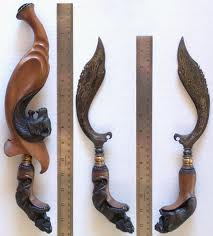
Kujang Weapon
Kujang is one of the traditional weapons of the Sundanese people, which has cultural values that are quite taken into account by cultural observers. Kujang is the only weapon that is only owned by the Sundanese people, and for that let us know more about this one weapon. By still inserting messages; presented not to be praised let alone insulted but presented to be known and corrected. From the title, it already occurred to me that the cleaver is the traditional weapon of West Java province. Why is this weapon known as the Kujang, it is almost similar in shape to a sickle or sickle. However, there are abnormalities in the hollow back. The Kujang heritage itself has been known since the time of the Pajajaran Kingdom in the 14th century AD, during the reign of King Siliwangi. In the past, Kujang could not be separated from the life of the Sundanese people because of its function as agricultural equipment. This statement is contained in the ancient manuscript Sanghyang Siksa Kanda Ng Karesian (1518 AD) as well as oral traditions that developed in several areas, including in the Ranch area, Ciamis.
Evidence that supports the statement that a cleaver is a farming tool can still be seen today in the Baduy, Banten, and Pancer Pangawinan communities in Sukabumi. Other sources state that this weapon was used in the 4th century as a tool for agricultural needs, but in the 9th century AD, the value of the cleaver became sacred. At this time, the cleaver was used as an heirloom weapon by the kings of the Pasundan land. This weapon is believed to have magical powers and is able to give authority and supernatural powers to its owner. Kujang is a weapon full of mystery.
The value of the Kujang as an amulet or amulet first appeared in the history of the Padjadjaran Makukuhan Kingdom. Precisely during the reign of Prabu Kudo Lalean. Since then, the Kujang has been gradually used by the kings and nobles of the Kingdom as a symbol of authority and supernatural powers. One time, Kudo Lalean was doing tapa brata somewhere. Suddenly the prabu got the inspiration to redesign the shape of the Kujang, which had been used as an agricultural tool. Surprisingly, the latest design that was in the mind of the King, the shape is similar to the island of "Djawa Dwipa", which is known as the island of Java today. So, after receiving this inspiration, Prabu Kudo Lalean immediately assigned Mpu Windu Supo, a blacksmith from the royal family. He was asked to make blades like what was in the King's mind. At first, Mpu Windu Supo was upset about the shape of the weapon he had to make. So before doing work, Mpu Windu Supo meditated, observing the King's mind. Finally, an image of the weapon prototype was obtained, as Kudo Lalean had in mind. After his meditation was over, Mpu Windu Supo started his work. With magical touches enriched with spiritual philosophical values, it becomes a weapon that has high power. This is a Kujang that has a unique shape and becomes an object with magical powers. This weapon has 2 striking characteristics. The shape resembles the island of Java and there are 3 holes somewhere on the blade. This is a weapon that in future generations will always be associated with the Padjadjaran Makukuhan Kingdom. The shape of the island of Java itself is a philosophy of the King's ideals, to unite the small kingdoms of Java into one kingdom headed by King Padjadjaran Makukuhan. Meanwhile, the three holes on the knife symbolize the Trimurti, or the three aspects of the Godhead of Hinduism, to which Kudo Lalea also adheres to.
The three aspects of Divinity point to Brahma, Vishnu, and Shiva. The Hindu Trinity (Trimurti) was also represented by the 3 main kingdoms at that time. These kingdoms include Pengging Wiraradya, which is located in the eastern part of Java; The Kambang Putih Kingdom, located in the northern part of Java, and the Padjadjaran Makukuhan Kingdom, located in the West. The shape of the Kujang developed further in later generations. Different models appeared. As Islamic influence grows in society, the Kujang has undergone a design resembling the Arabic letter “Syin”. This was an attempt by the Pasundan region, namely Prabu Kian Santang, who wanted to convert the Pasundan people to Islam. In the end, Kujang's philosophy, which has Hindu and religious nuances from past cultures, was reinvented in accordance with the philosophy of Islamic teachings. Syin itself is the first letter in the shahada poem (sentence) in which every human being testifies to the One God and the Prophet Muhammad as His messenger. By saying the creed and this intention in the heart, every human being automatically converts to Islam.
The manifestation of Islamic values in the Kujang weapon is to expand the area of the blade which conforms to the shape of the letter Syin. The latest model of Kujang should be able to remind its owner of his loyalty to Islam and its teachings. The five holes on the Kujang have replaced the meaning of the Trimurti. These five holes symbolize the 5 pillars of Islam (pillars of Islam). Since then, the Kujang model describes the combination of the two styles designed by Prabu Kudo Lalean and Prabu Kian Santang. However, the authority of the Kujang as an heirloom weapon that is full of "other powers" and can give certain powers to its owner, remains. In its development, the Kujang weapon was no longer used by kings and nobility. Ordinary people also often use Kujang just like the Kings and nobles.
In Sundanese society, Kujang is often seen on display as a home decoration. It is said that there is some kind of belief related to luck, protection, honor, authority, and others. However, there is one thing that must not be done. Namely displaying Kujang in pairs on the wall with sharp blades facing each other inside. This is a taboo or prohibition. In addition, no one is allowed to take a photo of him standing between the 2 Kujangs in that position. Reportedly, this will cause the death of the person within 1 year, no more but could be less. Bogor "My Tradition" once a week (the plan is every Thursday). This was conveyed by the Mayor of Bogor Diani Budiarto when receiving a visit from the Head of the West Java Batik Foundation Mrs. Sendy Dede Yusuf at the Bogor City Hall. The typical Bogor batik has the motif of drizzling rain, cleavers, and deer. So, the cleaver monument is not just a monument that is the pride of the city of Bogor, but also a cultural symbol that will be further developed at this time. Don't forget about the maintenance of the monument. starting from cleanliness, idle hands, or the chaos of city transportation that sometimes "deliberately stops" at red lights.
It is said so because many believe that in the Kujang there is a magical and sacred power. For most Sundanese people, Kujang is considered not just an ordinary weapon. But a weapon that has "other powers" beyond human reason. Even Sundanese people who do not believe in the existence of other (supernatural) powers behind the Kujang, will definitely treat the Kujang in a special way. At least appreciate the Kujang as a home decoration, even a souvenir. This is where the value of the authority of the Kujang weapon is proven. Kujang does have philosophical values for the ancient Sundanese people. And the process of its creation is very closely related to the need for other powers than a weapon. The origin of the Kujang itself was actually inspired by an agricultural tool. This tool has been widely used from the 4th century to the 7th century AD. At that time the shape was closer to the figure of a sickle or sickle, then in the 9th century, the shape of the Kujang began to take shape as we see it today. Since then, the public's image of Kujang has changed.